
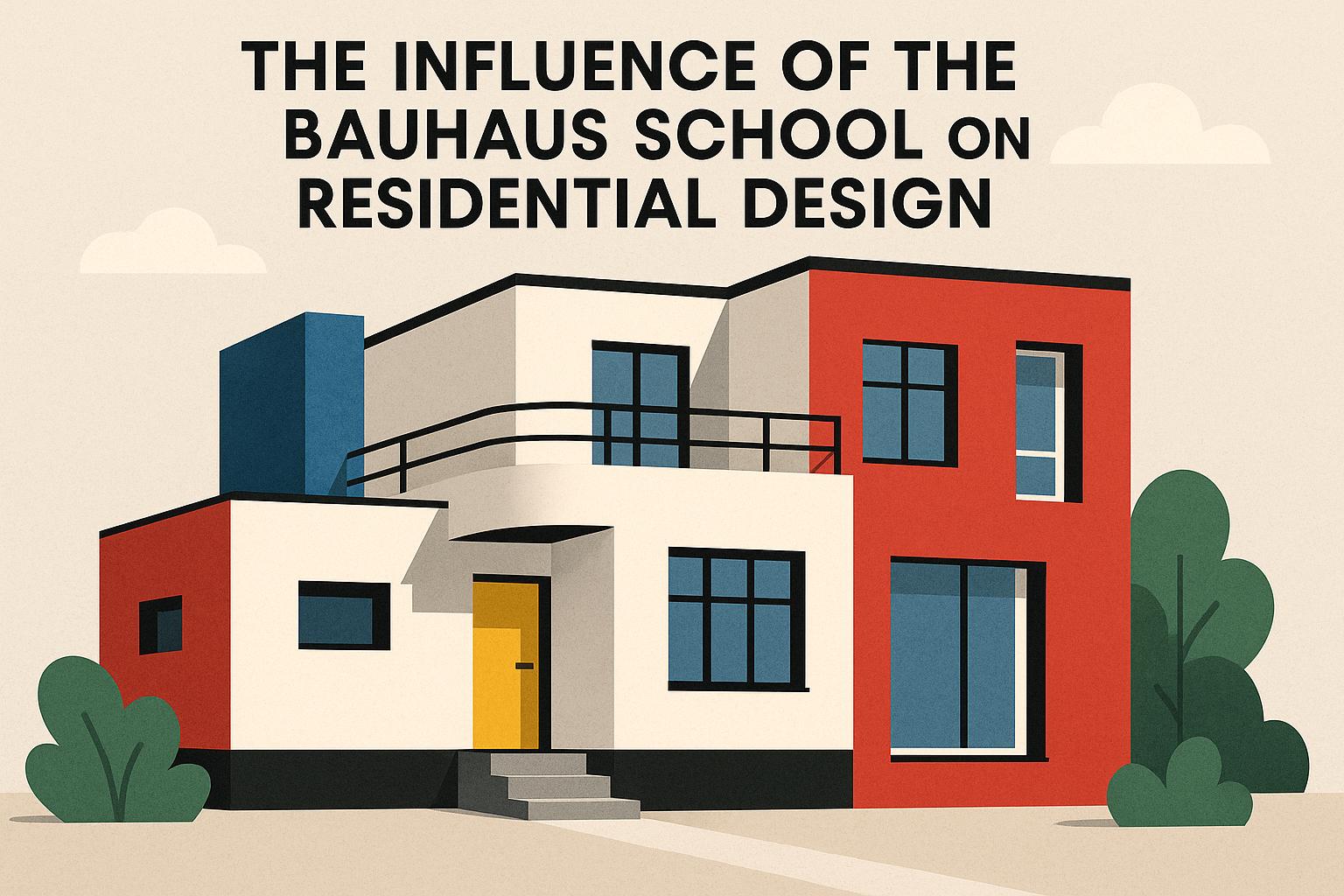
The Bauhaus School and Its Principles
The Bauhaus School, established by Walter Gropius in Weimar, Germany, in 1919, represented a groundbreaking approach to artistic and architectural education. By integrating crafts and fine arts, the institution aimed to revolutionize art pedagogy, blending practical techniques with artistic creativity. The guiding principles of the Bauhaus School, particularly its focus on functionality and simplicity, have profoundly reshaped modern residential architecture. These elements became foundational in developing new architectural paradigms that influence how homes are structured and styled today.
Key Principles
The philosophy of the Bauhaus School is built on several fundamental principles that have left an indelible mark on architecture, especially observable in residential designs.
Form Follows Function: Central to Bauhaus ideology is the concept that a building’s form should be primarily informed by its intended purpose. In residential contexts, this means crafting homes that prioritize practicality. Each design element is chosen for its functionality, ensuring that the architecture serves everyday life efficiently.
Less is More: Minimalism is a cornerstone of Bauhaus design. This principle advocates for simplicity, with an emphasis on clean lines and unembellished forms. In residential architecture, this translates to spaces that feel open and uncluttered, promoting a serene and organized living environment.
Influence on Residential Design
The Bauhaus movement’s integration of form, function, and art finds expression in various facets of contemporary residential architecture. Its principles continue to inspire and guide the modern architectural landscape.
Open Floor Plans
The concept of open floor plans in modern residences owes much to the Bauhaus School’s influence. By eschewing non-load-bearing walls, spaces are utilized more efficiently, fostering larger communal areas and a seamless flow between different sections of a home. This design choice not only enhances social interaction but also optimizes space management and light distribution throughout the house.
Use of Industrial Materials
Bauhaus architects pioneered the use of industrial materials like steel, concrete, and glass in residential architecture. These materials are celebrated for their durability and aesthetic contribution to minimalism. The implementation of large glass windows and the use of steel frames are now common features in residential designs, allowing for unobstructed views and integration with natural surroundings. This use of materials highlights the blend of functionality, durability, and modern aesthetics that the Bauhaus School championed.
Flat Roofs
The adoption of flat roofs in modern architecture is another testimony to the Bauhaus School’s enduring influence. Flat roofs present both aesthetic and practical advantages, offering additional usable spaces for terraces, gardens, or recreational areas. They contribute to the sleek, minimalist appearance that characterizes Bauhaus-inspired homes and enhance the functionality of residential spaces by providing extra outdoor areas for various uses.
Integration with Nature
A notable aspect of Bauhaus-influenced residential design is the harmonious integration of buildings with their natural environment. Strategic window placements maximize natural light, reducing reliance on artificial lighting and contributing to energy efficiency. Furthermore, the use of materials and colors that blend with surrounding landscapes creates homes that feel like extensions of their environment. This approach not only supports sustainable living practices but also ensures that homes are aesthetically aligned with the natural world, promoting a sense of peace and well-being.
Conclusion
The Bauhaus School’s enduring impact on residential design underscores its core philosophy of unifying art, technology, and craftsmanship. Homes designed in accordance with Bauhaus principles are a testament to the lasting value of functionality and aesthetic harmony. These homes are efficient, practical, and in tune with their surroundings, embodying the vision that the Bauhaus School set forth over a century ago. While numerous original Bauhaus structures have been modified or lost over time, the fundamental ideas conceived at the school continue to shape architectural practices and influence contemporary home design. To delve deeper into the Bauhaus’ profound impact, one might explore specialized architectural literature or scholarly articles that document and analyze this influential movement.