
Contents
The Visionary Architecture of Zaha Hadid
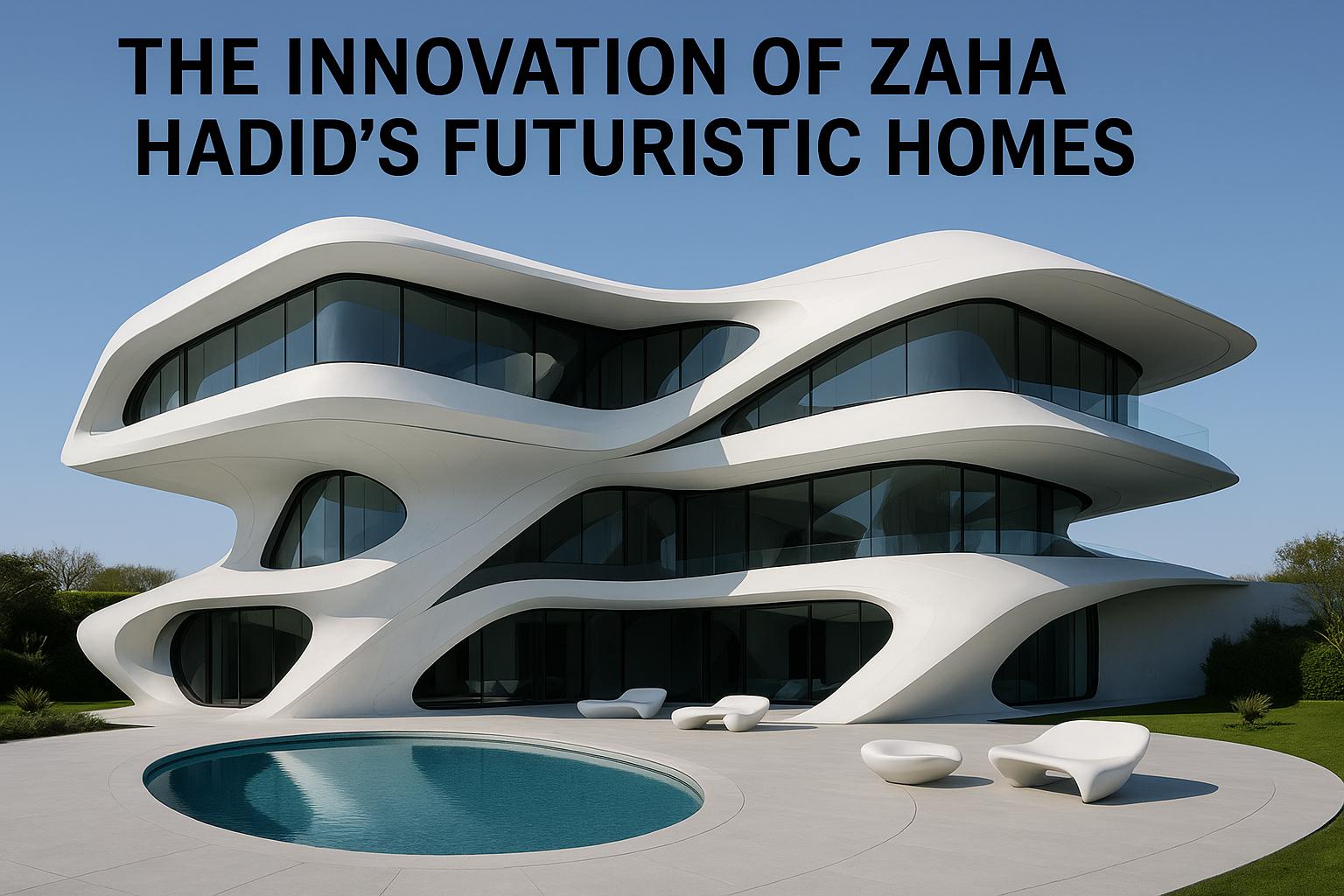
Zaha Hadid, an Iraqi-British architect, is renowned for her ability to redefine architectural design, particularly through her futuristic homes. Her visionary approach seamlessly combines organic forms with unparalleled structural ingenuity, opening the door to a new era in architecture that challenges the limits of conventional design.
Design Philosophy
Hadid’s architectural philosophy embraces the concepts of fluidity and movement as core elements. She aspired to transcend traditional architectural boundaries and create spaces that inspire, rather than simply serve a function. Her belief that architecture should engage and excite its occupants is evident in her work, where bold curves, dynamic forms, and a profound sense of motion are prominent.
By breaking away from conventional design norms, Hadid has introduced a new design language. Her work is characterized by the fluid lines and sweeping forms that mimic natural shapes, creating a seamless blend between built environments and their surroundings. This visionary perspective ensures that her architecture remains engaging and relevant, pushing the boundaries of architectural possibility.
Structural Innovation
A key hallmark of Hadid’s architectural innovation lies in her unique approach to structural design. She often leveraged advanced mathematical models and computer-aided design to create forms that, prior to her contributions, seemed unattainable. One of the most striking features of her designs is how her buildings often appear to defy gravity, capturing the observer’s attention and sparking curiosity.
The Capital Hill Residence in Moscow serves as an exemplary illustration. The building’s upper floors extend dramatically over the landscape, capturing the essence of Hadid’s ability to integrate architecture with its natural environment. This design doesn’t just challenge conventional ideas about structure and form but also showcases the possibilities of what architecture can achieve when pushing beyond ordinary limitations.
Materials and Techniques
Hadid’s choices in materials and construction techniques were as groundbreaking as her designs themselves. She embraced state-of-the-art materials like reinforced concrete and high-tensile steel to construct the fluid, organic shapes that became her signature. The adoption of such materials facilitated her ability to push structural possibilities to their limits.
By employing innovative materials, Hadid could craft architectural forms that were not only visually striking but also structurally robust. The buildings she designed are testament to her exploration of how to use materials in novel ways, highlighting her commitment to merging form with function in unprecedented ways.
Legacy and Impact
The impact Zaha Hadid has on the architecture field cannot be overstated. She has inspired a new generation of architects to explore the boundaries of design, encouraging them to adopt innovative methods and materials in their own work. The principles that define her futuristic homes have transcended residential architecture, influencing larger-scale projects internationally.
Hadid’s legacy is evident not only in the physical structures she left behind but also in the way architects around the world conceive and execute their designs today. Her pioneering spirit and determination to challenge norms have set a new standard for what architecture can be, thus ensuring that her influence will endure for generations.
Continued Influence
Beyond her immediate contributions, Hadid’s vision continues to inspire advancements in architectural education and practice. Young architects look to her work as a source of inspiration and innovation. Her designs have ignited a global dialogue about the role of architecture in shaping the way we live, prompting professionals to rethink the relationship between form, function, and aesthetic delight.
For those interested in delving deeper into Zaha Hadid’s groundbreaking work, numerous online resources and publications provide further insights into her designs and methodologies. Her legacy invites continual exploration and appreciation, posing an open invitation to rethink and reinvent architecture as we know it.
In conclusion, Zaha Hadid leaves behind a legacy of visionary architecture where art, technology, and function intersect in remarkable ways. Her futuristic homes not only reflect her unique approach but also serve as an enduring inspiration for architects and designers worldwide, ensuring that her innovative spirit endures as a beacon of creative possibility in the architectural landscape.