
Contents
Introduction
Al Capone, an infamous figure in American history, rose to prominence during the tumultuous Prohibition era. Known for his criminal empire that spanned illegal liquor distribution, gambling, and other illicit activities, Capone remains a symbol of 1920s organized crime. While his operations and legal troubles are extensively documented, this article delves into an aspect that is often overshadowed: his residence in Chicago. The house, located in the Park Manor neighborhood, is a vital piece of his story, offering insights into his personal life and operations. This article will examine the construction, unique features, and ongoing legacy of Al Capone’s Chicago mansion.
The Construction of the Mansion
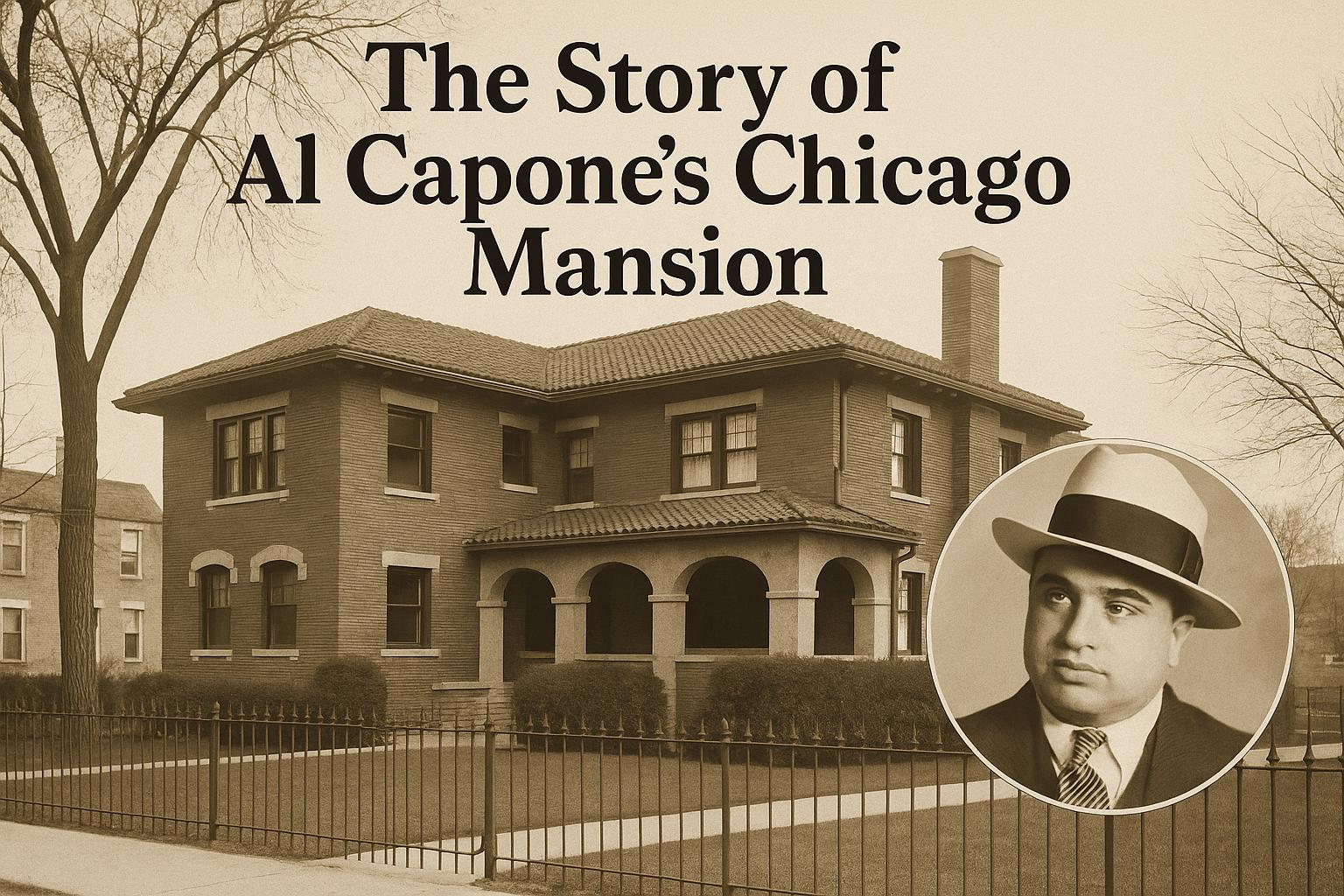
Al Capone’s Chicago mansion, sitting at 7244 South Prairie Avenue, was initially constructed in 1908. Built as a brick two-flat building, the design was a common architectural choice in the early 20th century Chicago landscape. This period saw the rise of such buildings, which provided both functionality and a touch of elegance, catering to the burgeoning middle class.
Design and Features
The mansion’s architecture is a reflection of its time, featuring a sturdy exterior made entirely of brick. The structure, though modest by modern standards, was marked by its spacious interior rooms. These spaces were intentionally kept practical, void of the opulence typical of gangster stereotypes. The restrained design highlights Capone’s desire to maintain a low profile amid escalating gang rivalries and legal scrutiny.
Security Measures
Recognizing the inherent risks of his lifestyle, Capone transformed the mansion into a highly secure environment. The house was equipped with multiple secret tunnels and hidden escape routes, an indication of his constant concern over rival gangs and law enforcement. The mansion’s fortifications included heavy locks and reinforced walls, creating a nearly impregnable fortress. These measures ensured not only Capone’s safety but also the security of his close associates and family members, allowing him to continue his operations with relative peace of mind.
Al Capone’s Life at the Mansion
At the heart of Capone’s personal life was his family, with whom he shared his Chicago residence. His mother, Teresa, played a significant role in the household, providing stability amidst his chaotic career. The home was more than a residence; it was a hub for Capone’s extensive criminal network. From within these walls, he managed and strategized his control over Chicago’s illegal businesses, orchestrating his operations with meticulous precision.
Link to Notorious Activities
While the mansion itself bore witness to no direct criminal acts, its association with Capone’s illegal ventures is undeniable. The home served as a meeting point for Capone and his trusted associates, a place where discussions and plans were conducted far from prying eyes. Its strategic location provided a discreet environment for plotting activities that befuddled law enforcement and fed the media’s fascination with organized crime.
Narrative from the Residents
Stories and rumors from neighbors over the years paint a picture of the mansion’s intriguing past. Reports of luxury automobiles parked outside and groups of sharply dressed men frequenting the residence allude to the covert influence Capone exerted over his surroundings. Despite these occasional signs of criminal dealings, Capone adeptly sustained the mansion’s unassuming exterior, ensuring it remained a well-kept secret from authorities.
The Mansion After Capone
Following Al Capone’s notorious conviction for tax evasion in 1931, life at the mansion underwent significant changes. The property stayed within the family until the 1950s, when it was eventually sold. As time passed and ownership shifted, the building experienced both curiosity and apprehension from potential buyers, the shadow of Capone’s legacy looming large over its historic walls.
Recent Developments
Despite its storied past, the mansion has seen few changes over the years. Efforts to maintain its historical integrity have been balanced with necessary renovations, ensuring its preservation for future generations. This balance between preservation and modernization highlights the ongoing fascination with properties linked to notable historical figures.
Current Status
Presently, the mansion remains a private residence, serving as both a historical monument and a point of fascination for those interested in Prohibition-era history. Despite the surrounding neighborhood’s evolution, the mansion endures as a tangible link to the city’s vibrant and, at times, turbulent past. Its continued existence preserves a chapter of Chicago’s history that captivates historians and enthusiasts alike.
Conclusion
The story of Al Capone’s Chicago mansion offers more than a glimpse into the life of America’s most infamous gangster. This modest yet intriguing house encapsulates the dichotomy of Capone’s life: a man who wielded immense power while striving to remain inconspicuous. The mansion’s historical relevance speaks to those eager to explore the intersections of crime, history, and architecture. For visitors and scholars alike, the property remains a significant marker of Chicago’s rich and diverse past.