
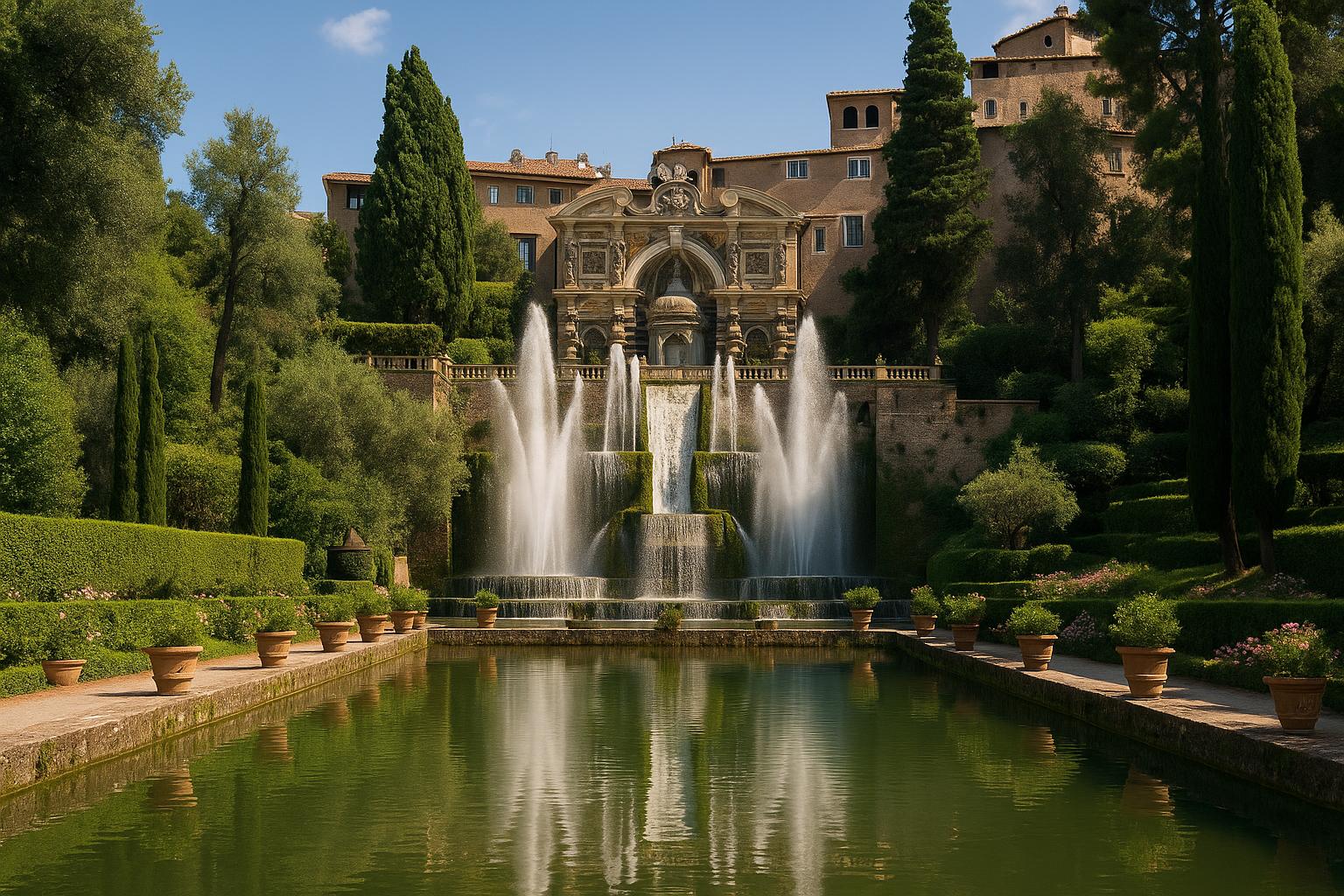
Introduction to Villa d’Este
The Villa d’Este, located in Tivoli, Italy, offers a profound insight into exceptional Renaissance architecture and design. As a distinguished UNESCO World Heritage Site, this villa not only encapsulates the splendor of Italian nobility in the 16th century but also showcases Italian artistic and cultural innovation. Commissioned by Cardinal Ippolito II d’Este, the villa was intended to be an emblem of his authority and refined taste. This document will explore the architectural significance, the exquisitely designed gardens, the historical context, and the present-day visiting experience of Villa d’Este, providing readers with a detailed understanding of its importance and beauty.
Architectural Significance
Design and Construction: Villa d’Este is a quintessential example of Renaissance ideals that epitomize the harmonious blend of art and nature. Its design, credited to the eminent architect Pirro Ligorio, began its journey of construction in 1550. The architectural style of the villa is a blend of grandeur and detail, characterized by intricate frescoes that adorn the ceilings and walls, vast and opulent hallways, and a series of artistically crafted terraces that offer breathtaking views and a serene ambiance. The architecture symbolizes the ingenuity of the period, incorporating artistic expression and functional engineering. This makes the villa a microcosm of Renaissance architectural principles.
Interior Features: Within the walls of Villa d’Este, visitors are greeted with an array of rooms adorned with extraordinary frescoes that depict a variety of mythological scenes. These frescoes were not merely for decoration; they served as a medium of intellectual expression and cultural representation for Cardinal Ippolito II d’Este. Each room tells a unique story, showcasing the amalgamation of mythology and artistry. The rich colors, detailed imagery, and innovative techniques used in these frescoes reflect the dynamic and advanced art culture of the Renaissance, allowing visitors to connect with the personal interests and cultural affiliations of its historically influential owner.
The Gardens of Villa d’Este
One of the most visually and architecturally compelling features of Villa d’Este is its expansive and intricately designed gardens. These gardens play a pivotal role in the villa’s architectural harmony, skillfully designed to accentuate the natural gradient of the landscape, with a series of terraces strategically descending towards the Aniene River.
The Fountains: The gardens boast an array of elaborate fountains, each with its own unique design and artistic significance. Among the most prominent are the *Fontana dell’Ovato* and the *Fontana di Nettuno*, which stand as testaments to the advanced engineering and aesthetic considerations of the Renaissance period. These fountains were not only architectural marvels but also expressions of the era’s fascination with water as a dynamic element of both beauty and tranquility. The manipulation and control of water flows within these fountains demonstrate the innovative engineering techniques of the time, allowing water to become a lively and integral part of the garden’s aesthetic.
Botanical Diversity: Villa d’Este’s gardens are also home to an astounding diversity of plant species. The gardens have been meticulously curated over centuries, showcasing a combination of native Italian flora and exotic species that have been carefully selected and maintained to create an enchanting tapestry of colors and textures. This diverse botanical collection reflects a blend of horticultural skill and artistic vision, emphasizing the Renaissance appreciation for nature’s beauty and bounty. The gardens thus serve as an enduring testament to both the scientific and aesthetic pursuits of the time, offering both a dynamic landscape and a living museum of plant diversity.
Historical Context
The historical context of Villa d’Este is as significant as its architecture and gardens. The villa’s construction aligns with a period of great religious and political change, coinciding with the Catholic Church’s strategies in response to the Protestant Reformation. For Cardinal d’Este, the villa served as much more than a luxurious residence—it was a strategic tool to gain political influence and assert cultural power. During this era, art and architecture were leveraged as powerful symbols of political expression and authority. Villa d’Este embodies this concept, representing an era in which artistic innovation was intertwined with political ambition, making it not only a historical artifact but also a symbol of the broader cultural and political narratives of its time.
Visiting Villa d’Este
Today, Villa d’Este remains a testament to the grandeur and sophistication of the Renaissance, attracting visitors from all over the world. A visit to the villa allows guests to explore both its opulent interiors and the stunning gardens, experiencing firsthand the luxury and artistry that define Renaissance Italy. The villa offers an immersive historical and cultural experience, allowing visitors to step back in time and appreciate the intricate details and magnificence that characterized an era of great artistic and architectural achievement. Additionally, further information about visiting hours, events, and the villa’s history can be accessed through the official Villa d’Este website.
In conclusion, Villa d’Este is much more than a historical monument—it remains an enduring symbol of the Renaissance’s artistic and cultural innovations. Through its magnificent architecture and richly curated gardens, the villa provides a lens into the luxurious lifestyle and refined aesthetics of its period. As an invaluable asset to Italy’s cultural heritage, Villa d’Este continues to enthrall and educate visitors about the complexities and beauty of Renaissance art, architecture, and horticulture.