
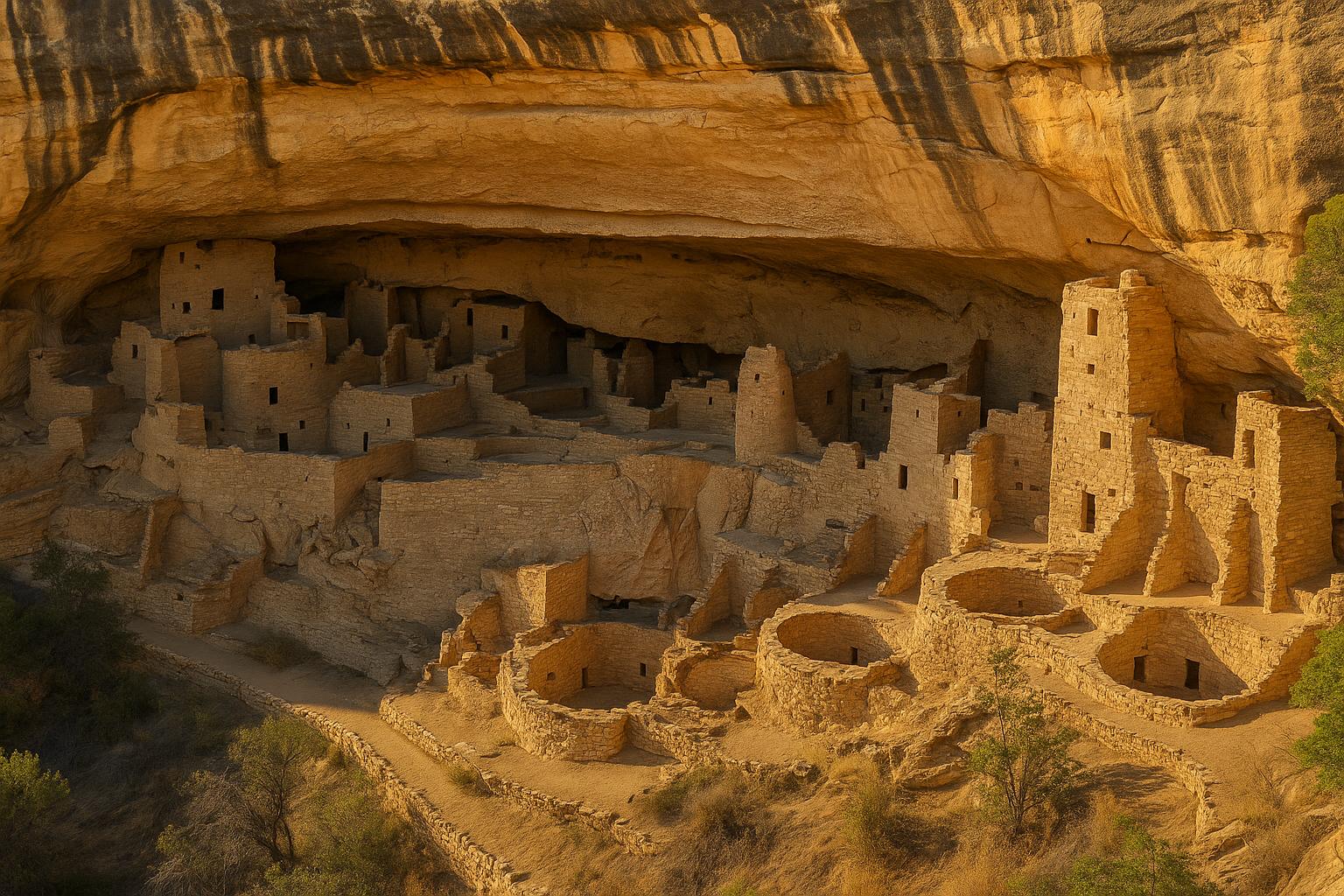
The Significance of Cliff Palace
Cliff Palace is a remarkable ancient structure located in Mesa Verde National Park, Colorado, USA. Constructed by the Ancestral Puebloans, it provides an exceptional insight into a civilization that inhabited the area from approximately 550 to 1300 CE. This site offers valuable information about the lifestyle, social structure, and ingenuity of a fascinating historical culture.
Architecture and Structure
Cliff Palace is renowned for its ingenious architecture, which includes 150 rooms and 23 kivas—round rooms believed to have been used for ceremonial purposes. The site is strategically constructed under an overhanging cliff, providing natural protection from the elements such as rain and harsh sunlight. This positioning exemplifies the builders’ acute awareness of their surrounding environment and their aptitude in utilizing it to their advantage. The Puebloans utilized sandstone, mortar, and wooden beams to build their dwellings, showcasing their advanced understanding of engineering and architecture. Their ability to create a complex structure with available materials speaks volumes about their innovative construction techniques.
Materials and Methods
The construction materials of Cliff Palace include sandstone, mortar, and wooden beams, reflecting a harmonious blend with the natural resources available in their environment. Sandstone blocks were expertly cut and shaped to form the walls and foundations, while wooden beams were employed for support and roofing purposes. The mortar used to bind these elements together was created from soil, water, and ash, providing a lasting bond that has endured over centuries. Such methods demonstrate a profound comprehension of architectural principles and an ability to adapt available resources into functional forms.
Purpose and Use
The primary purpose of Cliff Palace remains a subject of research and debate among scholars. While it is generally accepted that it served as a residential area, its size and complexity suggest that it may have also functioned as a community center or a hub for social and ceremonial activities. The presence of numerous kivas indicates the importance of communal gatherings and spiritual practices within the site. Scholars continue to study the site to better comprehend its role in Ancestral Puebloan society.
Cultural Significance
Cliff Palace not only provided shelter but also served as an emblem of cultural identity and expression for the Ancestral Puebloans. The architecture and spatial arrangement reflect the values, beliefs, and social practices of this community. Intricate carvings and murals adorning the site reveal aspects of religious symbolism and everyday life. This level of artistry illustrates the significance placed on connecting their architectural environment with their cultural narratives and spiritual beliefs.
The Ancestral Puebloans
The Ancestral Puebloans, previously known as the Anasazi, were an indigenous culture renowned for their sophisticated society and architectural prowess. Their settlements, which spread across the Four Corners of the United States, exhibit an intricate understanding of their environment and available resources. The civilization is particularly noted for abandoning the area around the late 1200s, a decision that researchers attribute to a combination of environmental factors and social dynamics. Evidence suggests issues such as prolonged droughts, resource depletion, and social upheaval may have contributed to their migration.
Environmental Challenges
The environment played a crucial role in shaping the Ancestral Puebloans’ lifestyle and eventually influencing their decision to leave the area. Changes in climate patterns, including reduced precipitation and increased aridity, likely strained the agricultural resources that were vital for sustenance. The reduced crop yields would have led to food shortages and heightened competition for essential resources, impacting the social and economic stability of the community.
Preservation and Tourism
Today, Cliff Palace is an integral part of Mesa Verde National Park and is recognized as a UNESCO World Heritage site. Preservation efforts are crucial for maintaining its structural integrity, allowing future generations to explore and understand this ancient heritage. Initiatives include managing visitor access, stabilizing structural elements, and conducting ongoing archaeological research to prevent deterioration. For visitors interested in exploring the site, guided tours are available, offering a detailed view into the lives of the Ancestral Puebloans. These tours provide valuable educational opportunities, allowing individuals to immerse themselves in the historical and cultural context of the site.
Elevating awareness about the importance of preservation and responsible tourism is vital for ensuring the longevity of Cliff Palace. Efforts such as interpretive programs, informative signage, and community events help bridge the gap between past and present, instilling an appreciation for cultural heritage.
For further information on visiting hours and tour availability, consider checking the official Mesa Verde National Park website. The careful management of visitor experiences and educational outreach ensures that the story of Cliff Palace continues to be told, safeguarding its legacy for generations to come.