
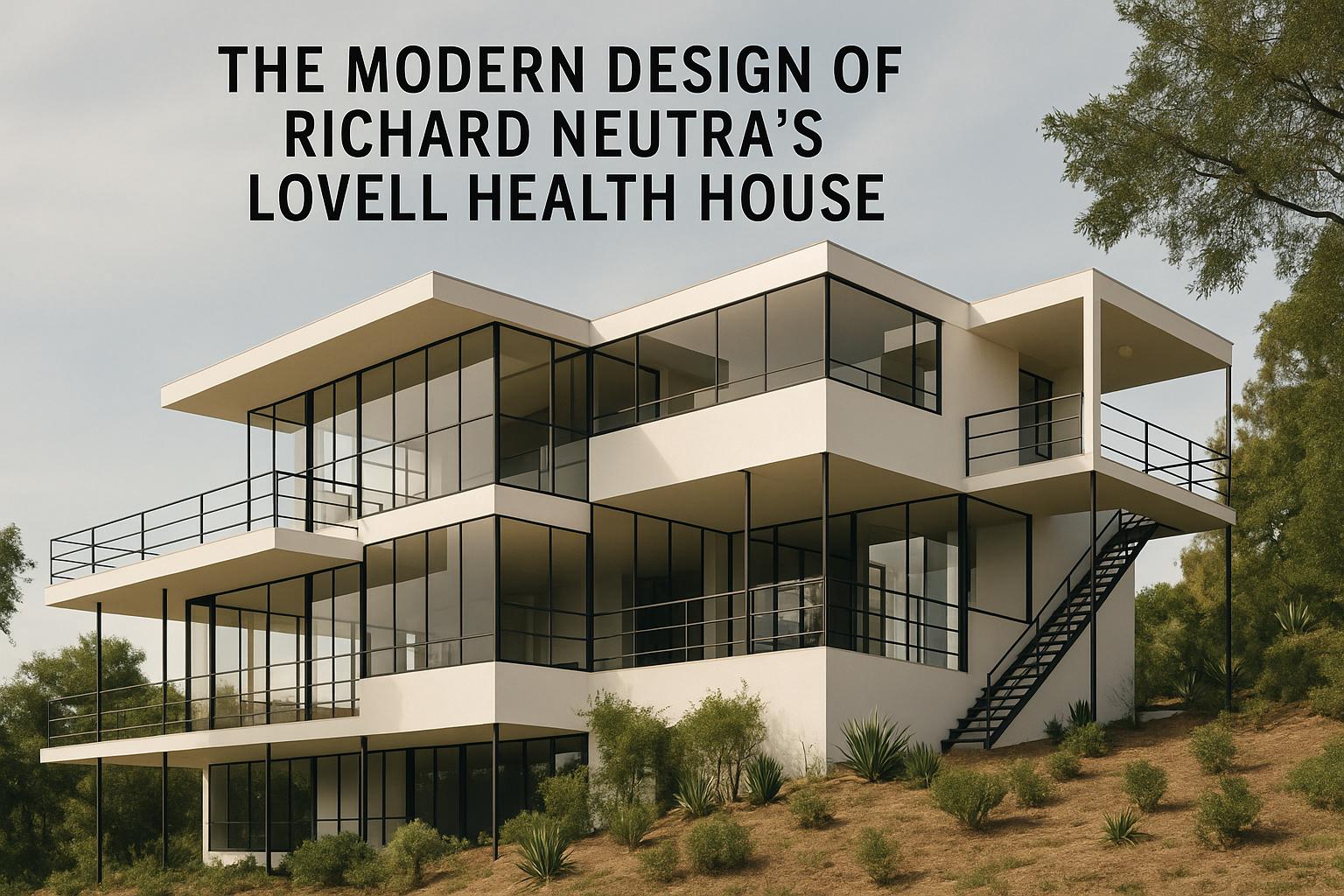
Introduction to Richard Neutra’s Lovell Health House
The Lovell Health House, designed by the renowned architect Richard Neutra, stands as a seminal piece of modernist architecture. Completed in 1929, the house is located in the Los Feliz neighborhood of Los Angeles, California. It represents a distinctive approach to residential design during the early 20th century, showcasing Neutra’s commitment to the International Style of architecture.
Neutra’s architectural philosophy was characterized by a deep appreciation for modernism and a firm belief in the principles of the International Style. His approach combined clean lines, geometric shapes, and an integration of indoor and outdoor spaces, which are all evident in the Lovell Health House. The structure not only captures the essence of modernism but also reflects Neutra’s progressive ideas about how architecture can enhance health and well-being.
Architectural Features
The design of the Lovell Health House prominently features the use of steel and glass, materials that were revolutionary in residential architecture at the time. This choice not only reflects the industrial aesthetics of the era but also enables the structure’s sustainability and functionality, aspects that Neutra emphasized in his work. In particular, the extensive use of these materials demonstrates the architect’s dedication to creating a building that harmonizes with its environment while meeting the needs of its inhabitants.
Steel Frame Construction: One of the most distinctive aspects of the Lovell Health House is its steel frame construction. Being among the first steel-framed residential buildings in the United States, it highlights Neutra’s innovative approach to design. The use of steel not only provided the necessary structural support but also allowed for greater design flexibility, resulting in open interior spaces and large expanses of glass.
Extensive Use of Glass: Large glass windows and walls are a significant feature of the house, allowing for abundant natural light and a strong connection with the surrounding environment. This abundance of glass not only creates a visual link between the interior and the outdoor landscapes but also supports Neutra’s vision of architecture that promotes health and well-being through natural light and ventilation.
Open Floor Plan: The interior spaces of the Lovell Health House flow seamlessly into one another, reflecting the modernist ideal of open, flexible living spaces. This open floor plan enhances the sense of continuity within the interior spaces, allowing for easy movement and interaction among the house’s residents. It also exemplifies Neutra’s belief in flexible spaces that can be adapted to the evolving needs of the occupants.
Health-Focused Design
The Lovell Health House was specifically designed with health and wellness in mind, reflecting the interests of its original owner, Dr. Philip Lovell, who was a known health fanatic. Neutra incorporated several design elements that were intended to promote a healthy lifestyle, thus aligning with Dr. Lovell’s holistic health principles.
Natural Ventilation: Thoughtfully placed windows and ventilators facilitate optimal air circulation throughout the house. This design strategy not only ensures comfort but also contributes to the residents’ health by providing clean, fresh air. The integration of natural ventilation systems was a forward-thinking aspect of Neutra’s design that remains relevant in sustainable architecture today.
Sun Exposure: The orientation of the house, along with its extensive glazing, maximizes sunlight. Neutra believed that exposure to sunlight had numerous health benefits, including improved mood and vitality. This architectural consideration showcases Neutra’s commitment to enhancing the occupants’ health through thoughtful design.
Outdoor Living Spaces: The integration of balconies and terraces into the design of the Lovell Health House encourages outdoor activities and strengthens the connection with nature. These elements not only provide spaces for recreation and relaxation but also extend the living area beyond the confines of the interior, promoting a lifestyle that embraces both indoor and outdoor experiences.
Richard Neutra’s Legacy
Richard Neutra, known for merging art, landscape, and practical living, aimed to create spaces that enhanced the quality of life for their occupants. The Lovell Health House serves as a prime example of his philosophy, marking a significant moment in architectural history. Neutra’s work is consistently celebrated for pushing the boundaries of conventional architectural designs and championing principles that prioritize the well-being of the inhabitants.
By incorporating innovative materials, open layouts, and health-centric features, the Lovell Health House paved the way for future architectural developments. Neutra’s legacy is evident in the continued study and admiration of his work by architects and historians, who see in his designs a timeless model for achieving harmony between human-made structures and natural environments.
Visiting the Lovell Health House
For design enthusiasts and architecture scholars, the Lovell Health House remains a fascinating study subject. Though it is a private residence, it occasionally opens for tours, providing insight into Neutra’s pioneering design. Visiting this iconic house offers a unique opportunity to experience firsthand the architectural principles that defined Neutra’s work and to appreciate the innovative spirit that characterized early 20th-century modernism.
The opportunity to explore the Lovell Health House allows visitors to engage deeply with the advanced concepts that Neutra applied, encouraging a greater understanding of how thoughtful design can positively impact human lives. By witnessing the interaction of design elements with their environment, visitors can appreciate the enduring relevance of Neutra’s ideas in today’s context of sustainable and healthy living environments.
Potential visitors can explore certain architectural sites and organizations that offer guided tours and historical context, providing a comprehensive view of this architectural marvel. Through these tours, individuals can appreciate the timeless nature of Neutra’s work and its unyielding impact on modern architectural practices.