
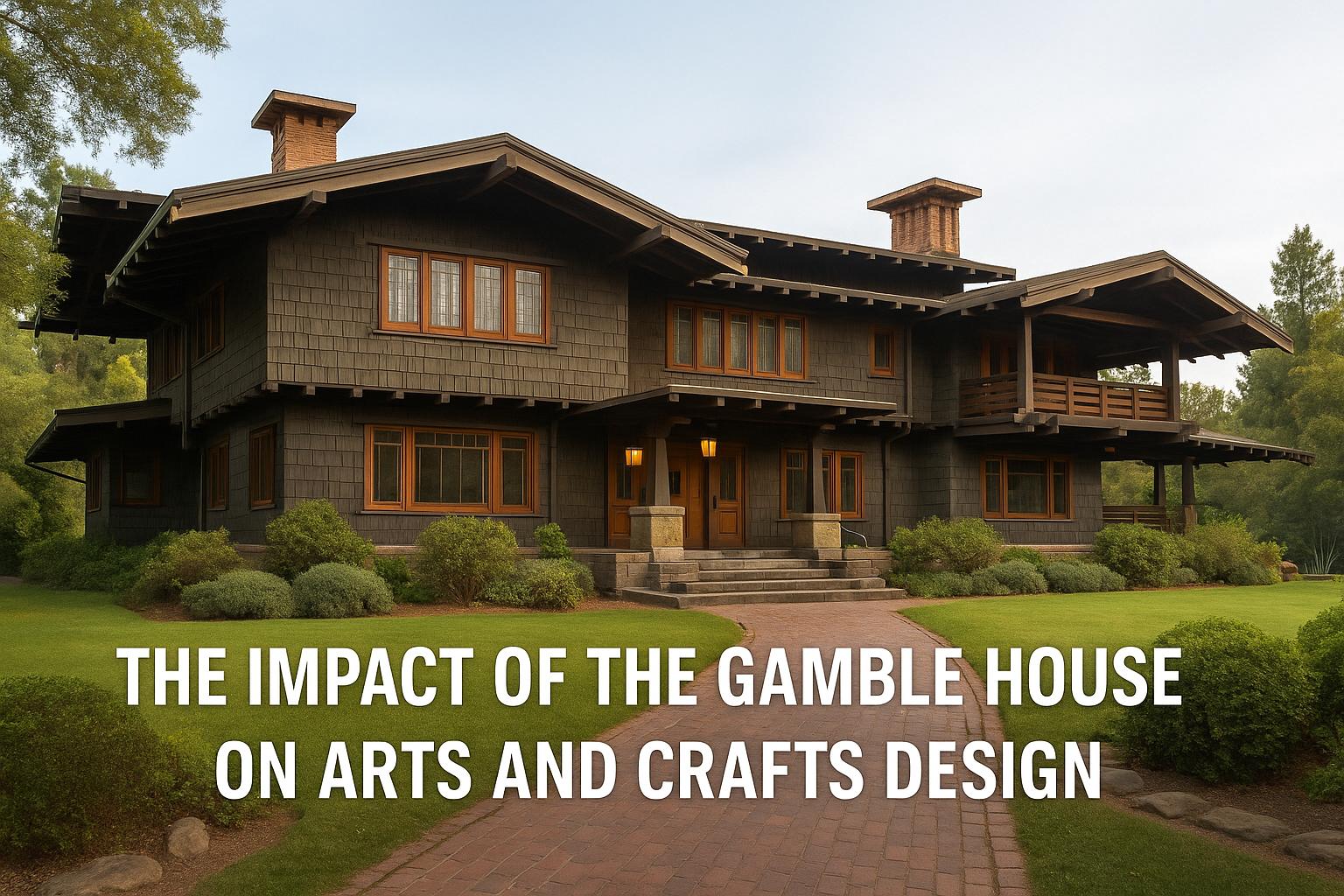
The Gamble House: A Pillar of the Arts and Crafts Movement
The Gamble House, located in Pasadena, California, stands as a quintessential example of the American Arts and Crafts movement. Designed by the renowned architects Charles and Henry Greene in 1908, this residence has significantly influenced architectural design and craftsmanship. Constructed for David and Mary Gamble of the Procter & Gamble company, the house encapsulates several ideals of the early 20th-century design philosophy.
The Design Philosophy
The Arts and Crafts movement emerged in the late 19th century as a response to the industrial revolution’s increasing reliance on mass production methods. During this period, the movement sought to revive handcrafted artistry as a counter to the mechanization that characterized the industrial age. The Gamble House exemplifies this reaction through its profound emphasis on hand-crafted detail and organic forms. The architects deliberately employed natural materials, intricate woodwork, and a seamless integration of interiors and exteriors to create a harmonious living space that resonates with holistic qualities. This approach underscores the designers’ commitment to both quality and aesthetic integrity, reflecting the overall ethos of the Arts and Crafts movement.
Materials and Craftsmanship
One of the defining characteristics of the Gamble House is its use of natural materials such as wood, stone, and glass. The Greene brothers meticulously selected each component with a mindful eye toward complementing the house’s aesthetic and functional aspects. The structure features intricate joinery, stained glass windows, and custom-designed furniture, showcasing the high level of craftsmanship synonymous with the Arts and Crafts movement. Each element reflects the designers’ dedication to detail, whether it’s the stepping stone pathways that lead to the entrance or the decorative inlays found within the house. This meticulous attention to the smallest details is a testament to the artistic drive and vision of the Greenes.
Architectural Influences
The architecture of the Gamble House is a fascinating blend of various influences, predominantly drawing from Asian and European styles. With its extended rooflines and emphasis on horizontal lines, the design elements evoke the calm and stability often associated with Japanese architecture. Meanwhile, the overall form and layout bear the hallmark characteristics of Swiss chalet styles. This unique synthesis of styles is emblematic of the Arts and Crafts movement, which sought to marry the beauty of traditional craftsmanship with the necessities of modern living. The result is a timeless residence that celebrates the best of various cultural influences while remaining distinctly American.
Impact on Modern Design
The significance of the Gamble House extends beyond its architectural brilliance. It served as a catalytic force for the growth of the Arts and Crafts movement in America, encouraging architects and designers to prioritize quality craftsmanship and the use of superior materials. This influence is clearly evident in subsequent generations of design professionals, many of whom have drawn inspiration from the principles embodied in this iconic house. Through exhibitions, seminars, and a growing body of scholarly work, the impact of the Gamble House continues to be felt in the wider field of architectural design and education.
Educational Influence
In the realm of education, the Gamble House plays a crucial role as a living museum and teaching tool for students and enthusiasts of architecture and design. It provides invaluable insights into early 20th-century architectural practices and the cultural context that shaped them. Many institutions offer guided tours, educational programs, and workshops centered around the house, ensuring that the ideals of the Arts and Crafts movement are not only preserved but actively taught to new generations. By offering these programs, the Gamble House actively contributes to the dissemination and perpetuation of its foundational tenets.
Further Resources
For those who are particularly interested in delving deeper into the Arts and Crafts movement and its considerable impact on modern architecture, there are numerous resources available for exploration. Engaging with organizations dedicated to preserving this rich heritage could prove to be a rewarding endeavor. The Gamble House itself hosts several educational programs and events that vividly illustrate its historical and cultural significance. Through its continued influence, the legacy of the Gamble House inspires and educates future generations of architects and designers, ensuring that the principles of the Arts and Crafts movement remain a vibrant part of contemporary design discourse.