
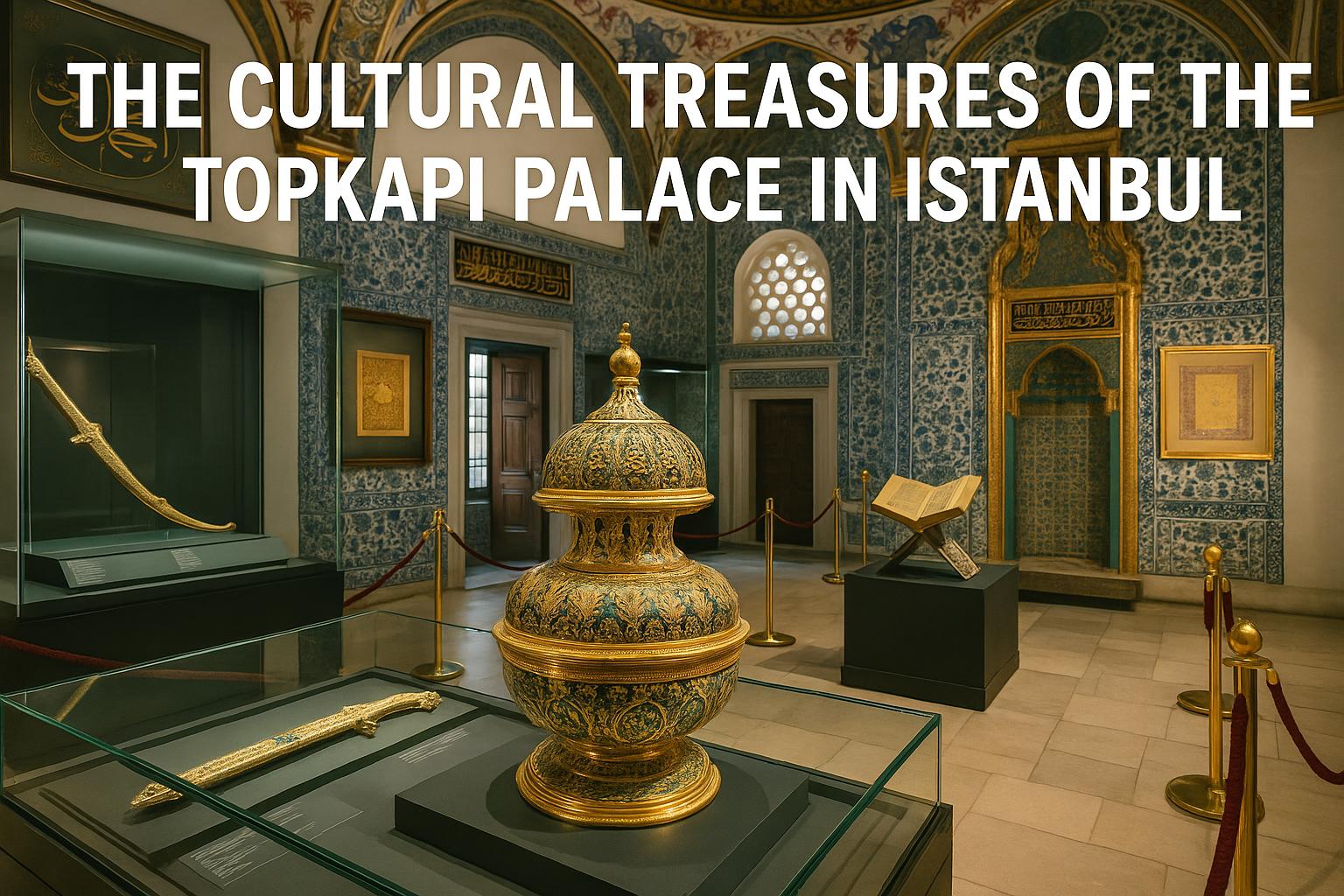
Topkapi Palace in Istanbul is a magnificent historical site, home to a vast array of cultural treasures that reflect the grandeur of the Ottoman Empire. Originally constructed in 1459 by Sultan Mehmed II, it served as the primary residence and administrative headquarters of the Ottoman sultans for nearly 400 years. As you step into the world of this historic palace, you’re not just entering an architectural achievement; you’re delving into a rich tapestry of history, showcasing the Ottoman Empire’s prowess in governance, art, and culture.
The Imperial Gate and Courtyards
The journey through the Topkapi Palace begins at the Imperial Gate, known as Bab-ı Hümayun, which is more than just an entrance point. It is an embodiment of the Ottoman Empire’s might and splendor. Beyond this imposing gateway, visitors are welcomed into a series of stunning courtyards, each having its own significance and function. The First Courtyard, also called the Courtyard of the Janissaries, was historically a hub of activity, functioning as an army barracks where the elite forces, known as Janissaries, were stationed. Furthermore, this courtyard served as a dynamic administrative area, bustling with the sounds of the empire’s daily operations. This space was not just practical but also ceremonial, as it was often used for royal parades and other state functions, further cementing its importance within the palace complex.
Second Courtyard: The Palace Kitchens and Council Hall
One step beyond the first courtyard, the Second Courtyard awaits, home to noteworthy features that capture the essence of palace life. The palace kitchens located here were nothing short of culinary powerhouses, producing the vast arrays of meals required to feed not only the royal family but also the palace staff and guests during grand festivals and feasts. These kitchens were responsible for crafting elaborate and intricate dishes, highlighting the culinary sophistication of the Ottoman era. Adjacent to the kitchens lies the Divan-ı Hümayun or Imperial Council Hall, a place of great political importance. Here, the grand viziers and other high-ranking officials discussed state matters and offered counsel to the sultan. This hall was a venue where significant decisions were made, impacting not only the empire but also its vast territories.
The Treasury and Sacred Relics
Venturing deeper into the palace, visitors encounter the Imperial Treasury, a chamber of treasures that leaves an indelible impression on all who behold it. The treasury is a dazzling array of jewels, armors, and artifacts, serving as a testament to the empire’s rich resources and artistic achievements. The Spoonmaker’s Diamond is a legendary piece within this collection, an 86-carat gemstone that captivates with its brilliance and size. Alongside it, the Topkapi Dagger is another masterpiece, decorated lavishly with emeralds and gold, showcasing the exceptional craftsmanship and high artistic standards of the time. The adjacent Chamber of Sacred Relics is spiritually significant, preserving items closely linked to Islam’s religious traditions and the Prophet Muhammad. These relics include the Prophet’s cloak and sword, revered by visitors and scholars alike for their historical and religious importance.
The Harem
Among the myriad sections of Topkapi, the Harem stands out for its mystique and exclusivity. More than 400 rooms compose this private domain, once home to the sultan’s family and concubines. The Harem offers a startling contrast between its intimate atmosphere and opulent décor, with beautifully adorned chambers, intricate tile work, and impressive frescoes. It’s here that the hierarchical structure and gender roles of the court played out, offering insights into the societal norms and personal lives of its residents. The Harem went beyond being merely a living space; it was a social and cultural microcosm, reflecting both the power dynamics and the introspective nature of royal life.
Gardens and Pavilions
The vast grounds of the palace also include lush gardens and exquisite pavilions, areas regarded as tranquil retreats and centers for contemplation and leisure. The gardens are skillfully designed, with tree-lined paths and fountains that offer a serene environment, while providing panoramic views of the Bosphorus Strait, a crucial waterway for trade and defense. Among the standout structures are the Baghdad Pavilion, Revan Pavilion, and the Twin Kiosks, each renowned for their architectural beauty and historical significance. These pavilions boast intricate tile work and meticulously adorned domes that exemplify Ottoman architectural and artistic mastery, with features such as decorative calligraphy and vibrant color schemes that reflect the aesthetic values of the age.
More than just a collection of architectural marvels, Topkapi Palace acts as a cultural and historical lens that offers a vivid window into the past, preserving the legacy of the Ottoman Empire’s prominence in world history. Today, as it stands as a museum, visitors can immerse themselves in its rich tapestry of history and art, experiencing firsthand the various exhibitions that strive to maintain the legacy of an epoch long past. Each section of the palace, whether public or private, offers unique insights into the societal structures, governance, and artistry that characterized one of history’s greatest empires. The enduring legacy of Topkapi Palace enables scholars, tourists, and history enthusiasts to appreciate its significance and the extensive cultural influence of the Ottoman period for generations to come. For more detailed information, you can explore further through the official website of the Topkapi Palace Museum.