
The Influence of Minimalism in Mies van der Rohe’s Works
Ludwig Mies van der Rohe, a pioneering figure in modern architecture, is renowned for his minimalistic approach to design. Many of his works reflect a deep commitment to simplicity and clarity, embodying the phrase he famously coined: “less is more.”
The Philosophy of Minimalism
Mies van der Rohe’s architectural philosophy was greatly influenced by his belief in the essentiality of form and function. He argued that design should be stripped of unnecessary details, focusing instead on the use of space and materials. This minimalist approach not only created aesthetically pleasing structures but also ensured their functionality and efficiency.
Understanding the Core of Minimalism
Minimalism in architecture revolves around the principle of reduction—distilling designs to their fundamental elements. It emphasizes clarity and harmony, creating environments that are both functional and visually appealing. Mies van der Rohe mastered this art through meticulous attention to detail and an unyielding focus on achieving simplicity through complex processes.
Exploring Space and Structure
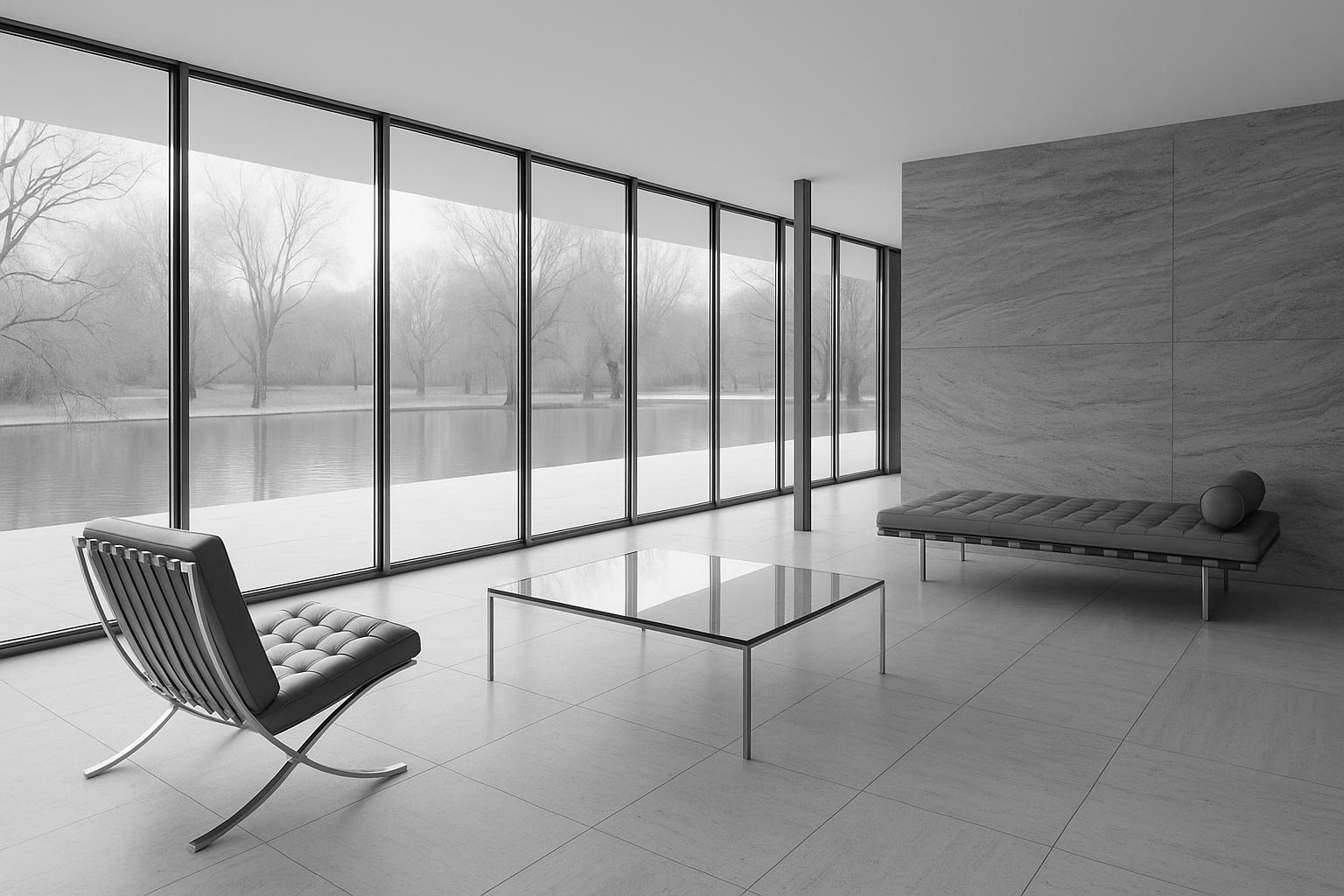
In his designs, Mies van der Rohe often exhibited a masterful balance of structure and space. By employing clean lines and expansive open spaces, he achieved a sense of order and purpose. These elements combined to form a cohesive whole that not only served practical purposes but also elevated the aesthetic experience. The use of modern materials like glass and steel was pivotal in this approach. They allowed Mies to integrate indoor and outdoor environments seamlessly, creating a fluid connection between nature and structure. This integration made it possible for buildings and their surroundings to coexist harmoniously, enhancing the overall experience for occupants.
Materials and Techniques in Minimalist Design
Mies van der Rohe was known for his innovative use of materials that were both modern and timeless. The transparency of glass and the strength of steel were employed to break down boundaries between interior and exterior spaces. Furthermore, the use of these materials helped him achieve a refined aesthetic that was both sleek and enduring.
Iconic Projects
Some of Mies van der Rohe’s most iconic projects include the Barcelona Pavilion and the Farnsworth House.
The Barcelona Pavilion
Originally constructed for the 1929 International Exposition, the Barcelona Pavilion is a prime example of his minimalistic style. This structure, with its open plan and use of luxurious materials such as marble and onyx, highlights Mies’s ability to create a serene yet functional space. The Pavilion’s design is characterized by its geometric lines and open spaces, providing a peaceful respite amidst the exposition’s hustle and bustle. In this space, Mies successfully demonstrated how minimal structural elements can create an impact that is both powerful and serene.
The Farnsworth House
The Farnsworth House, designed as a weekend retreat, exemplifies his use of glass and steel. Its transparent walls allow for an unobstructed view of the surrounding landscape, blurring the line between the interior and exterior—a concept Mies frequently explored. This project, located in a natural setting, emphasizes simplicity and transparency, with the building appearing to float above the ground. The design’s elegance lies in its simplicity, effortlessly merging structure with nature.
Technical and Aesthetic Achievements
Both projects exemplify Mies van der Rohe’s ability to marry technical innovation with aesthetic beauty. The minimal use of internal partitions in these projects demonstrates the architect’s capability to create expansive interiors while maintaining structural integrity and elegance. Mies’ focus on using a minimal number of materials and straightforward construction techniques highlights his commitment to both beauty and efficiency in design.
Legacy and Continued Relevance
Mies van der Rohe’s impact on modern architecture is undeniable. His minimalist ethos continues to influence contemporary design, with many architects adopting his principles of simplicity and functionality. Today, his work remains a testament to the beauty of minimalism, offering valuable insights into the creation of efficient and elegant architectural solutions. His ideas have found their way into a multitude of design philosophies and have become foundational in architectural education across the globe.
The Enduring Appeal of Minimalism
Minimalism’s appeal in contemporary architecture stems from its timeless quality—a crucial aspect of Mies’s legacy. The principles he championed continue to resonate due to their relevance in addressing modern-day challenges, such as sustainability and urbanization, which demand efficient yet aesthetically pleasing solutions.
For further exploration of Mies van der Rohe’s works and influence, visit the Barcelona Pavilion official site or explore the Farnsworth House website for more detailed information on his legacy. Through these resources, one can delve deeper into the intricacies of his architectural genius and appreciate the enduring significance of his work.