
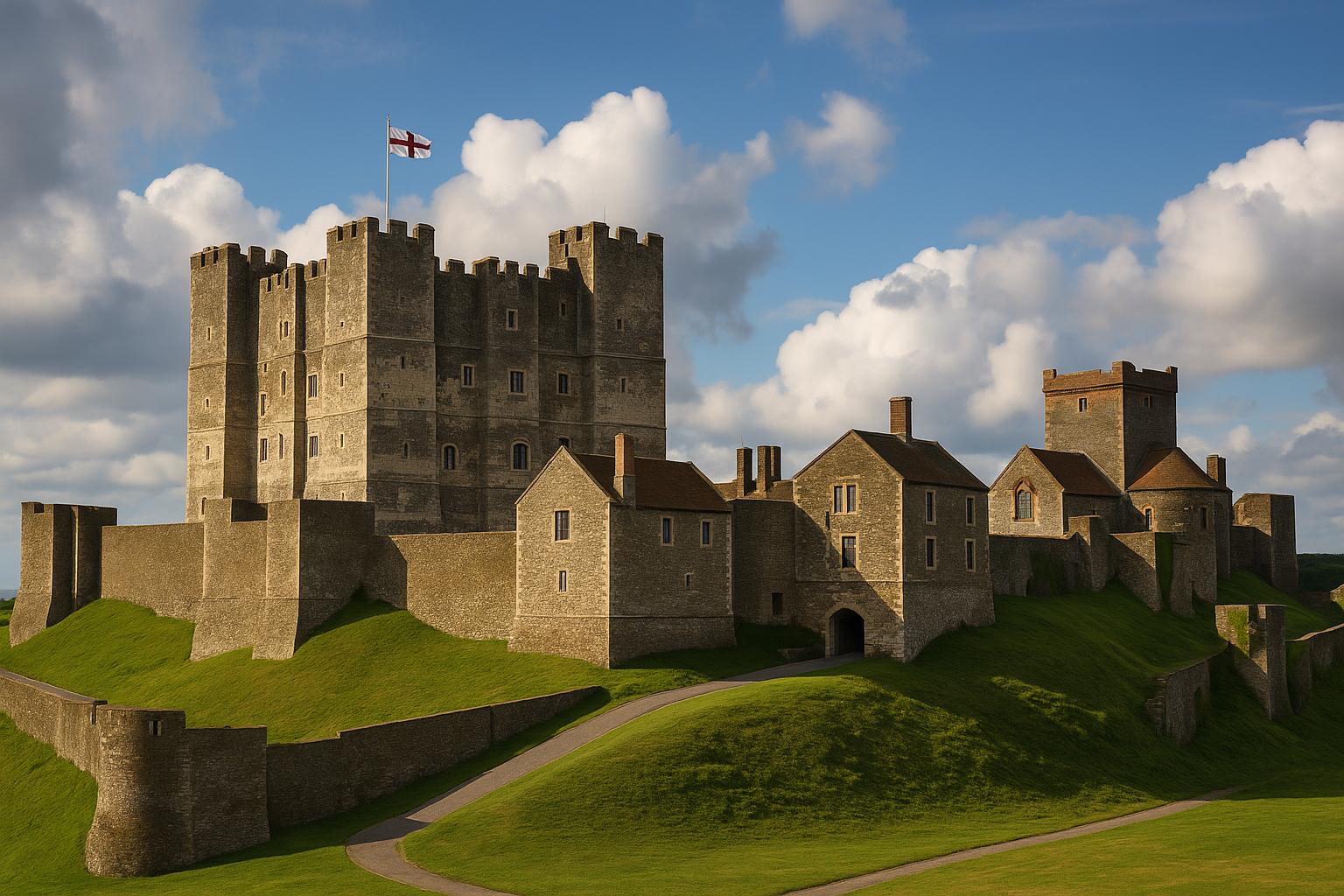
The Medieval History of Dover Castle
Dover Castle, often referred to as the “Key to England,” is a historic fortress situated on the southeastern coast of England. Its strategic position has made it a focal point of defense for the nation, particularly during the medieval period. The castle has a rich history that dates back to the Iron Age, but it truly came into prominence during the medieval era.
The Norman Influence
Following the Norman Conquest of England in 1066, Dover Castle saw significant developments. William the Conqueror recognized its strategic importance and began constructing fortifications. These initial attempts laid the groundwork for what would become a formidable medieval stronghold.
The Norman Conquest was a pivotal moment in English history, marking the beginning of a new era in governance, architecture, and cultural fusion. The decision of William the Conqueror to establish fortifications at Dover demonstrated his understanding of the need for securing his newly acquired kingdom. Dover’s location was critical; it was the closest English port to the European mainland, making it an unavoidable point of entry for any attacking force. Hence, fortifying this site was not only smart but essential for maintaining control over the conquered land. The early fortifications included a simple earthwork and timber-motte structure, standard for Norman designs.
Construction of the Great Tower
In the 12th century, King Henry II made extensive modifications to Dover Castle. Between 1180 and 1185, he commissioned the building of the Great Tower, which remains one of the castle’s most iconic features. Designed to impress as well as defend, the Great Tower was both a royal residence and a stronghold against potential French invasion.
King Henry II’s construction of the Great Tower was a move to consolidate his power and demonstrate the might of the English monarchy. The tower stands as a masterpiece of medieval military architecture, combining both defensive and residential functions. The dual purpose of the tower is evident in its layout and design. It had to be impervious to sieges while also representing the royalty’s status through its grandeur. The decision to construct the tower between 1180 and 1185 came at a time when Henry was facing external threats from France, and it was crucial that his stronghold at Dover could withstand any such challenges.
Architectural Features
The Great Tower is a testament to medieval engineering. Its thick walls and strategically placed arrow slits provided defensive capabilities, while its grand halls and residential quarters reflected the power and prestige of the English monarchy. The tower’s design was influenced by contemporary castles in France, yet uniquely adapted to Dover’s needs.
The architecture of the Great Tower is both functional and decorative. Its thick walls were designed to withstand siege warfare, which was common in the turbulent medieval times. The strategically placed arrow slits allowed defenders to protect the fortress from invaders while minimizing their own exposure to enemy fire. Within the tower, the grand halls and residential quarters were designed to convey the power and wealth of the monarchy. The halls were large enough to host gatherings and meetings of state, while the residential areas provided comfort and security for the king and his retinue. The design incorporated elements from contemporary French fortresses, testifying to the cultural exchange and architectural influences that were prevalent during that era.
Role in the First Barons’ War
Dover Castle played a pivotal role during the First Barons’ War (1215-1217). As tensions rose between King John and his barons, the castle became a key site of conflict. In 1216, it withstood a notable siege led by French forces supporting the rebel barons. The defense was commanded by Hubert de Burgh, whose effective leadership ensured that the castle remained in royal hands.
The First Barons’ War was a period of intense political strife and conflict. King John’s unpopular reign prompted the barons to rebel, leading to a declaration of war. Dover Castle’s role was crucial because of its formidable defensive structures and strategic location. The siege of 1216 was a notable episode in the war; the castle’s defenders, led by Hubert de Burgh, utilized every aspect of the fortification to repel the French forces. Hubert’s leadership was instrumental in ensuring the castle held against overwhelming odds, showcasing the effectiveness of its defensive design and its strategic criticality.
Siege Tactics and Defense
The siege of 1216 highlighted the castle’s exemplary defensive architecture. Despite the attackers’ efforts, including the use of siege engines, Hubert de Burgh’s defenders held out until the attackers retreated. This event cemented the castle’s reputation as one of the most formidable fortresses in England.
The siege tactics of the time often involved the use of siege engines, which were designed to break through fortifications or scale walls. However, Dover Castle’s thick walls and well-thought-out defensive features made it incredibly tough to conquer. During the siege, the skillful use of these defensive elements by de Burgh’s forces was unmatched. The defenders were able to exploit the castle’s design to withstand prolonged attacks, a feat that further solidified its reputation as a powerhouse of medieval military architecture.
Later Medieval Developments
The castle’s significance continued into the late medieval period. During the reign of Henry III, further renovations were undertaken to enhance its defensive capabilities. The outer walls were strengthened, and additional towers were constructed to provide better vantage points for defenders.
Over the following centuries, Dover Castle underwent several more adaptations to meet the changing nature of warfare and the increasing threats to the realm. Under King Henry III, considerable effort was put into updating the defenses of the castle. The improvements included strengthening the outer walls, a critical aspect in deterring sieges, and adding towers that provided expansive views of the surrounding landscape. These changes reflected the evolving architectural and military technologies of the time, as well as continued challenges faced by the English crown.
Legacy of Medieval Dover Castle
Today, Dover Castle stands as a symbol of medieval military architecture and the historical prowess of English monarchs. Its robust construction and strategic importance during turbulent times in England’s history highlight its enduring legacy. Visitors to the site can explore various sections of the castle and delve into its long and storied history, offering a window into the medieval past of England.
The legacy of Dover Castle is one of resilience and strength. Its capacity to repel attacks over centuries and continued use as a defensive stronghold demonstrates the astuteness of the medieval architects and rulers who recognized its strategic value. Dover Castle is not only a historical monument but also an enduring symbol of the medieval period’s architectural and military advancements.
For more detailed information on visiting Dover Castle and its historical significance, visit the official site of English Heritage.