
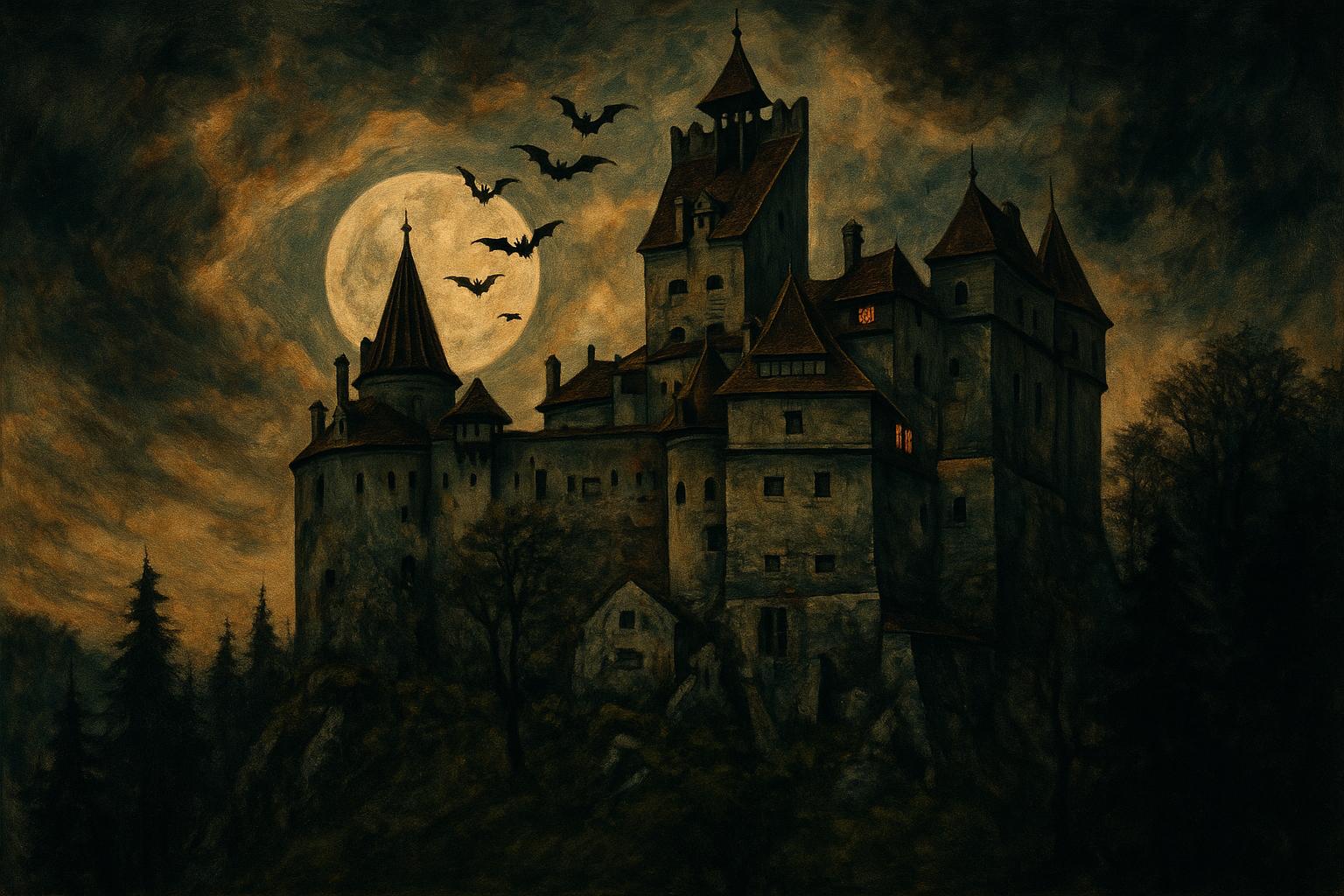
The History of Bran Castle
Bran Castle, located in Romania, is renowned worldwide for its association with the legendary Dracula, largely attributed to Bram Stoker’s infamous novel. Interestingly, Stoker never actually visited the castle, yet his imaginative description of Count Dracula’s menacing abode bears a remarkable similarity to Bran Castle, sparking the curiosity and imagination of many around the world.
Historically, the castle first appeared in documents in 1377 when the Saxons of Kronstadt, known today as Brașov, were granted permission to construct a fortress. The initial purpose of Bran Castle was to serve as a strategic stronghold against the encroaching forces of the Ottoman Empire. Over time, it evolved in its use and significance, standing as a timeless sentinel overlooking strategic trade routes through the Carpathian Mountains.
Architecture and Structure
The architectural design of Bran Castle is emblematic of a medieval fortress, characterized by its stone and wood construction. This architectural style echoes a bygone era, reflecting the rough-hewn qualities typical of fortifications from the Middle Ages. Bran Castle comprises 57 rooms, a testament to its sprawling size. These rooms are intricately connected by a labyrinth of narrow stairways and hidden passages, intriguing those who walk its ancient corridors.
Within the castle lies an open-air museum that provides a captivating glimpse into Romania’s rich cultural past. This museum houses a variety of traditional Romanian artifacts and furniture, showcasing life during the times the castle was inhabited. This feature of Bran Castle adds a significant layer to its appeal, allowing visitors to glimpse not just into the architectural marvels of the past but also the daily lives of its historical inhabitants.
Connection to Vlad the Impaler
A notable aspect often associated with Bran Castle is its purported connection to Vlad the Impaler, a historical figure whose notoriety sparked the Dracula legend. However, this link is tenuous and largely speculative at best. Vlad the Impaler did govern the surrounding region during the late 15th century, yet no solid historical evidence supports claims that he ever resided within the walls of Bran Castle. His associations with Dracula lore are more robust in other Romanian locations, such as the Poenari Fortress, which has more tangible connections to his life and reign. Despite this, the castle’s role in Dracula mythology enhances its mystique and allure, captivating literary and historical enthusiasts alike.
Dracula Tourism
In the modern era, Bran Castle has transformed into a magnet for tourists, primarily because of its associations with the Dracula legend. Each year, it beckons hundreds of thousands of visitors from across the globe. While many are drawn by the thrilling tales of Dracula, others visit to admire the castle’s breathtaking scenery and delve into its rich historical tapestry. The curious find themselves wandering through its corridors, envisage its storied past, and imagine the tales whispered through the ages on the wind-swept battlements.
For those seeking to uncover more about Bran Castle or planning a visit, the castle offers extensive resources. The official website provides detailed information on its history, visitor guidelines, and other attractions in the vicinity, which can be explored here.
Ongoing Intrigue and Conclusions
Bran Castle stands as an intricate tapestry of lore interwoven with historical fact. Though its ties to the legendary Dracula may tilt more toward fiction than reality, the intrigue it inspires remains substantial, continuing to capture the imaginations of historians and enthusiasts of Gothic literature. Its enduring allure ensures its place as an important cultural landmark, melding both historical and pop-cultural elements in the landscape of Romania. As the ages pass, the ongoing fascination surrounding Bran Castle sustains its status as a beacon of legendary and authentic historical significance.