
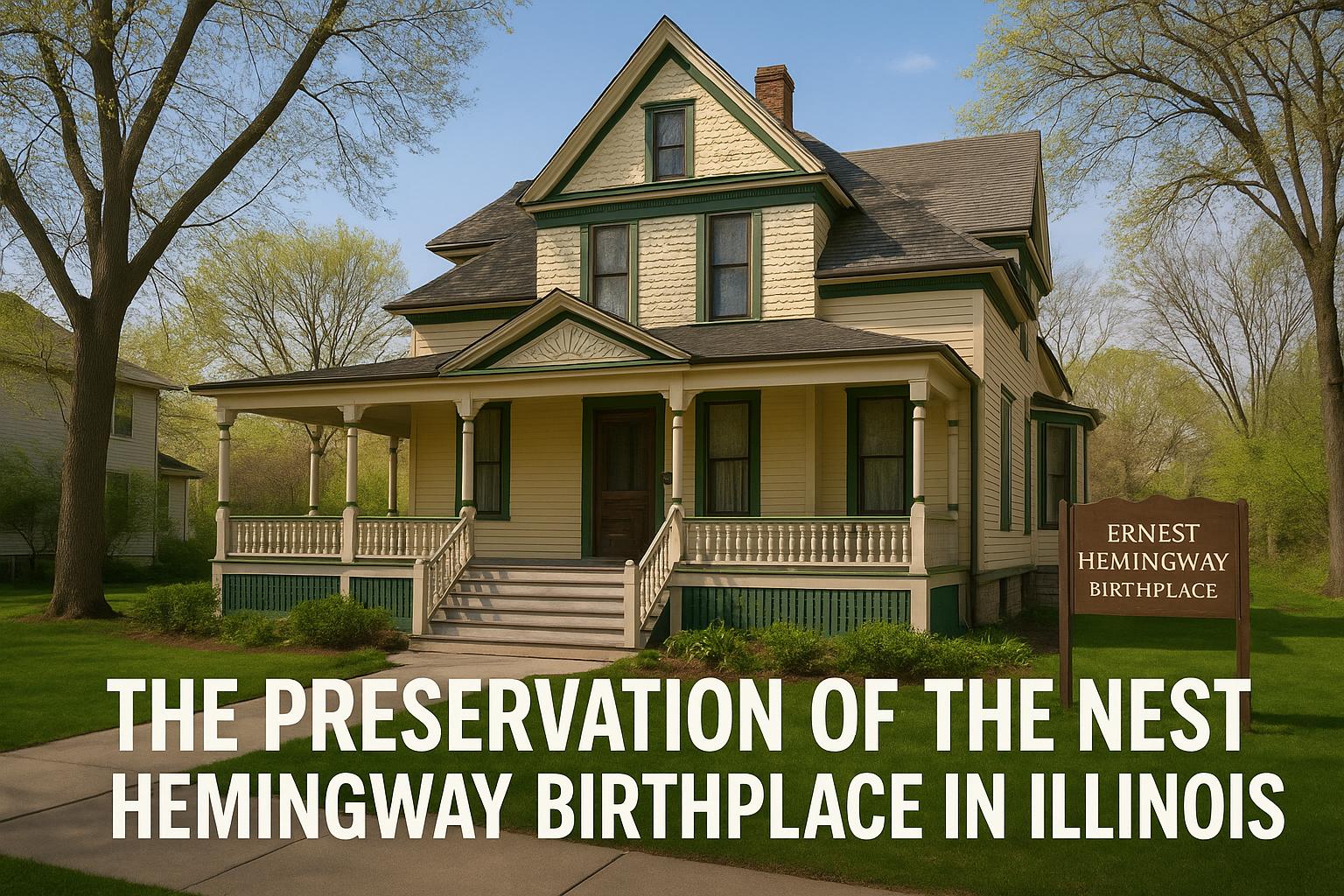
Overview of the Ernest Hemingway Birthplace
The Ernest Hemingway Birthplace, located in Oak Park, Illinois, stands as a significant historical landmark dedicated to preserving the early environment of one of America’s most iconic authors, Ernest Hemingway. Born on July 21, 1899, Hemingway spent the initial years of his life in this Queen Anne-style residence. The house was constructed in 1890 by Hemingway’s maternal grandparents and it presently functions as a museum, providing deep insights into Hemingway’s formative years and the time period he grew up in.
Historical Significance
The museum, through careful restoration, offers visitors a window into late 19th century and early 20th-century American life. This period was marked by great socio-economic changes that shaped much of American history. In this preserved environment, visitors can sense the influences that surrounded Hemingway during his childhood which may have contributed to his future writings. The house and its artifacts illustrate a genuine connection to Hemingway’s beginnings, which later evolved into literary achievements that greatly influenced modern prose and narrative style.
Preservation Efforts
The Ernest Hemingway Birthplace owes its maintenance to the determined efforts of the Ernest Hemingway Foundation of Oak Park. This dedicated organization is committed to conserving the historical integrity of the building while making it available for public enjoyment and education. Restoration initiatives have been meticulously executed to ensure the building’s structure and interior remain as authentic as possible, replicating their appearance during Hemingway’s residency in the home.
House Features and Exhibits
Within the walls of the Ernest Hemingway Birthplace Museum are rooms restored to resemble their original state, including the nursery where Hemingway was born. The furnishings and decorations have been selected thoughtfully to reflect the style and taste of the era when Hemingway resided there. The museum also showcases an array of collectibles, family photographs, and various personal items linked to the Hemingway family, enriching the authentic feeling and offering a glimpse into Hemingway’s upbringing.
Visiting the Museum
Guided tours in the museum offer enriching insights into the early life of Hemingway and the environment he was born into. Additional details regarding tour schedules, entrance fees, and any special activities are accessible on the museum’s official website. These tours serve not only literary aficionados but also individuals interested in architectural history and cultural anthropology. The museum’s location in Oak Park also invites visitors to explore the surrounding village, celebrated for its architectural heritage and works by Frank Lloyd Wright, augmenting the educational experience of the visit.
The museum’s ongoing preservation and operation at the Ernest Hemingway Birthplace serves a crucial objective in preserving Oak Park’s cultural and historical identity. By providing comprehensive access to Hemingway’s birthplace, the museum honors the long-lasting legacy of Hemingway’s work while also acting as an educational hub, nurturing inspiration across future generations.
Importance of Historical Preservation
Historical preservation of locations like the Ernest Hemingway Birthplace plays an integral part in cultural retention and community identity. The endeavor to keep such sites alive allows for a community to retain its rich heritage while educating the public about historical periods that have shaped current societal norms and conditions. By conserving these structures, communities ensure continuity of the narrative that speaks volumes about their past, further providing educational resources that can inspire current and future generations to appreciate and engage with their heritage in meaningful ways.
Educational Value of the Museum
The educational role of the Ernest Hemingway Birthplace Museum extends beyond presenting the life of Hemingway. It offers a nuanced understanding of the socio-cultural and economic dynamics that characterized the late 19th and early 20th centuries in America. Visitors and students of history alike can learn about the shifts in societal norms, familial structures, and how these factors might have shaped individuals like Hemingway and others of his time. The museum acts as a bridge for educational outreach, connecting visitors with both historical and literary perspectives.
Impact on Modern Literature
Ernest Hemingway’s influence on modern literature is profound and enduring. His concise and effective narrative style, often referred to as the ‘iceberg theory’ or the theory of omission, revolutionized how stories were told. Hemingway’s exploration of war, love, loss, and personal introspection found resonance in readers around the globe, creating a paradigm shift in literary circles. The museum dedicated to his birthplace helps to unravel the layers of his inspirations and influences, offering visitors an understanding of the roots of his groundbreaking narrative style.
The Broader Community Impact
Beyond its function as a historical site, the Ernest Hemingway Birthplace Museum contributes significantly to the local community in Oak Park through tourism and education. It provides a tangible cultural asset that strengthens community ties and generates economic benefits from tourism. Local schools, literary societies, and history buffs find a valuable resource in the museum, enabling them to drive greater community engagement with history, literature, and heritage conservation.
In conclusion, the Ernest Hemingway Birthplace is more than a mere historical site. It acts as a vibrant link to the past, an educational tool, and a beacon for cultural preservation efforts. By maintaining and showcasing the early life of one of America’s literary giants, the museum serves to inspire visitors not only to appreciate Hemingway’s formidable legacy but also to engage with the cultural and historical contexts of his era.