
The Architectural Marvel of Kendrick Bangs Kellogg’s Desert House
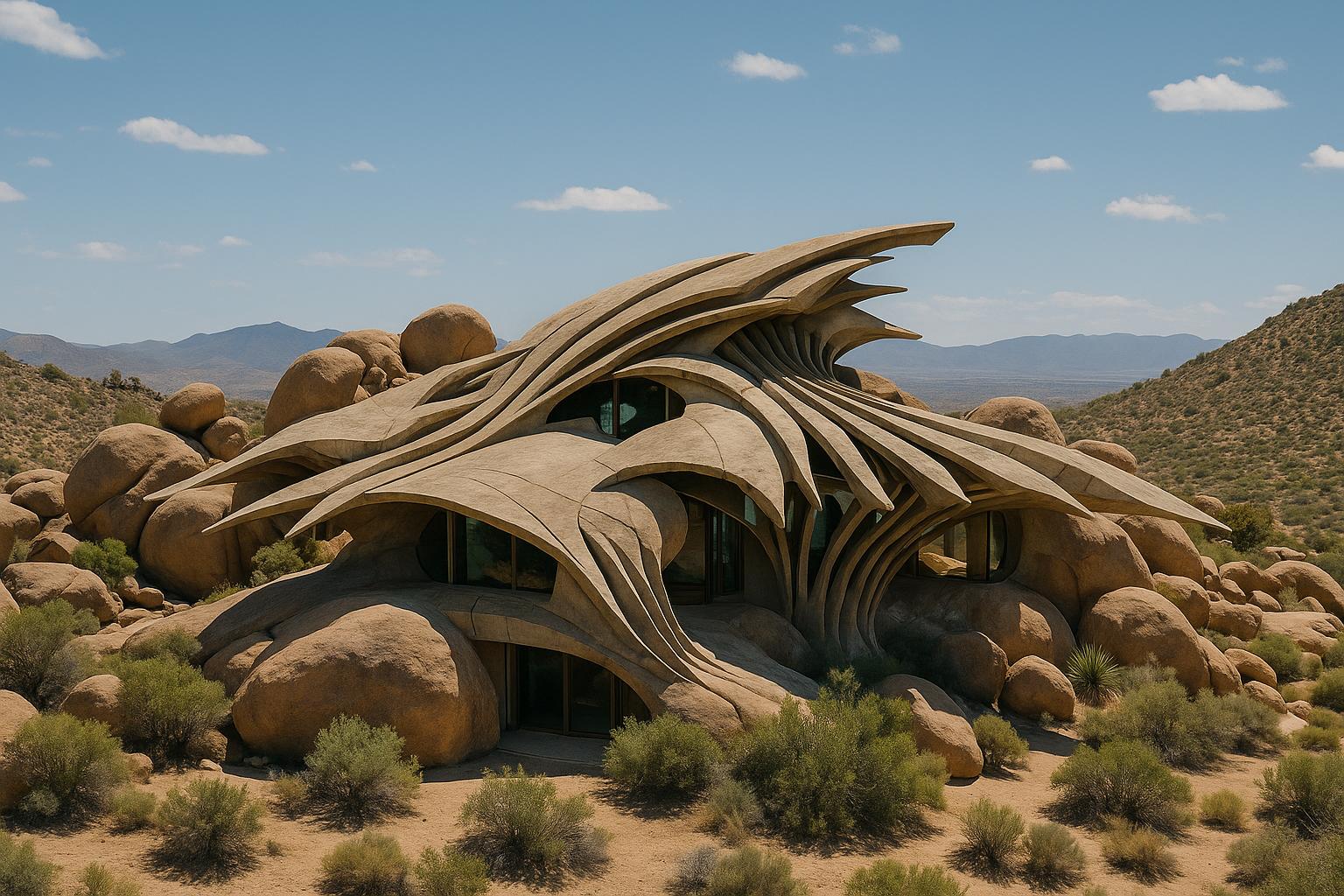
The Desert House, a creation by the esteemed architect Kendrick Bangs Kellogg, is a testament to the profound possibilities of architecture when it is intimately intertwined with its environment. Strategically located in the rugged, yet tranquil, landscape of Joshua Tree in California, this architectural wonder epitomizes the concept of blending human-made structures seamlessly with nature. The Desert House is often lauded for its unique ability to harmonize with the dunes and rock formations that characterize its surroundings, offering an inspirational example of ecologically sensitive design.
Design Philosophy
The architectural approach adopted by Kellogg in the conception of the Desert House is deeply rooted in a philosophy of environmental respect and fit. He ardently sought to not only embed his structure within the undulating desert sands and sparse vegetation of the Joshua Tree landscape but also to ensure that his creation enhanced rather than detracted from the natural environment. The drive behind Kellogg’s design ethos lies in his deft use of organic forms and natural materials. These elements not only imbue the structure with an inherent sense of belonging to its location but also actively contribute to the aesthetic and functional objectives of the construction.
Integration with the Environment
One of the standout features of the Desert House is its thoughtful integration with the local environment. Kellogg meticulously designed the structure to respect the ecological context in which it resides. By employing forms and construction techniques that mimic the local geology and topography, the Desert House achieves an organic unity with the land. The ingenious roof design, reminiscent of a series of overlapping shells, provides an exemplary case of how architecture can echo the natural order of its surroundings. This roof is not just a visual element but also serves functional purposes by enabling natural ventilation and light penetration, significantly lessening reliance on mechanical systems that may disrupt the desert ecosystem.
Materials and Construction
The selection and use of materials in the Desert House further reinforce its environmental integration. Kellogg predominantly utilized concrete and rock, materials that bear a tangible connection to the desert’s geological features. Sourced locally, these materials are chosen for their robustness in enduring the often harsh and unforgiving desert conditions. Their deployment within the structure’s curvilinear architectural forms resonates with the inherent geometric patterns found within the natural desert setting. This approach not only secures a visual and tactile coherence between the designed and natural environments but also ensures the building’s long-term viability in terms of maintenance and resilience.
Sustainability Considerations
Sustainability is another cornerstone of the Desert House, reflecting a forward-thinking approach to environmental stewardship. The building is strategically oriented to harness solar energy efficiently, optimizing heat capture during the colder months while maximizing shade to minimize cooling needs in hotter periods. This application of passive solar design principles greatly curtails the structure’s need for supplementary energy sources, underscoring a commitment to reducing ecological footprints. Additionally, innovative water conservation techniques are seamlessly integrated into the house’s systems, crucial in a desert where water is a precious and often scarce commodity. These methods ensure that the Desert House maintains a minimal impact on the local water resources, aligning the home with sustainable living practices.
The Desert House, through its seamless blend of form, function, and environment, stands as a pioneering work by Kendrick Bangs Kellogg. It exemplifies how architecture can serve as a conduit for preserving and enhancing the ecological and scenic values of its surroundings. Kellogg’s creation is not just a house; it is an emblem of respectful cohabitation with nature. It challenges architects and designers to rethink the traditional boundaries between natural and built environments, urging a reimagining of spaces that respect and celebrate the intricate tapestry of the natural world. For further insights into Kellogg’s architectural philosophy and other works, access this curated online resource.