
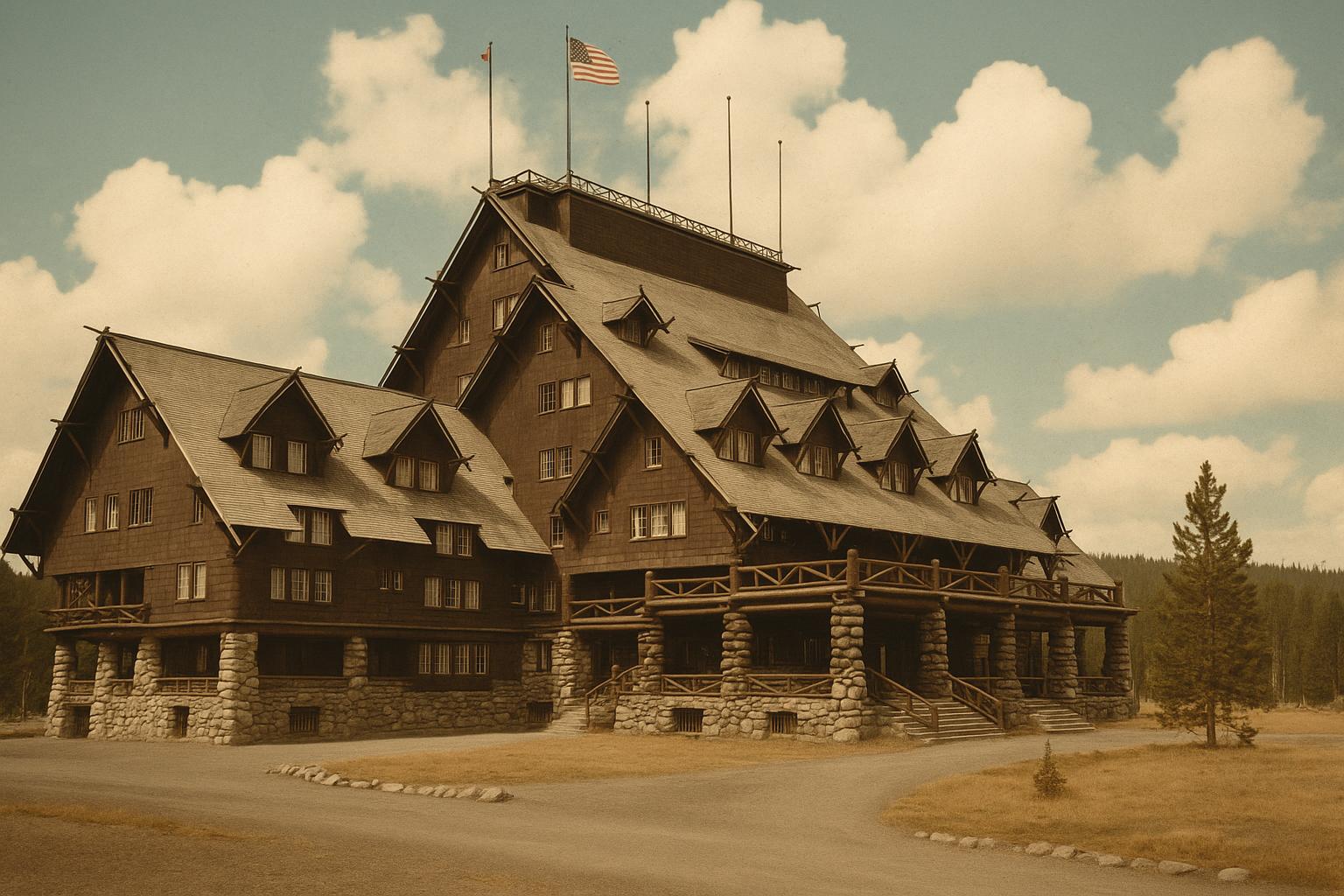
The Origins of the Old Faithful Inn
Perched near the iconic Old Faithful Geyser in Yellowstone National Park, the Old Faithful Inn stands as an exemplary piece of rustic architecture, a landmark that has stood the test of time since its completion in 1904. Renowned for its unique design and exquisite craftsmanship, the inn boasts a storied past intertwined with the broader history of the national park system in the United States.
Conception and Design
The primary architect behind the Old Faithful Inn was Robert C. Reamer, a visionary known for his penchant to blend architectural structures seamlessly with their natural environments. Commissioned by the Northern Pacific Railway, Reamer’s ambition was to create a distinctive and rustic destination for the increasing number of tourists flocking to Yellowstone. His groundbreaking design incorporated indigenous materials with a fresh architectural style, subsequently termed as Parkitecture. This design philosophy aimed to harmonize the built environment with the breathtaking, untouched landscape of the national parks—a principle that became central to the ethos of park architecture.
Construction and Features
The construction of the Old Faithful Inn commenced in 1903, employing natural materials sourced directly from the park’s surroundings. Logs and stone were significant components of its structure, exemplifying Reamer’s adeptness in blending the building effortlessly with its majestic surroundings. The inn’s iconic lobby is renowned for its soaring ceilings and intricate wooden trusses, which create a sense of interconnectedness with nature. A striking feature of the lobby is the massive stone fireplace, a centerpiece that has radiated warmth and hospitality for generations of travelers.
The natural materials chosen not only provided aesthetic beauty but also functional durability. Logs were gathered from lodgepole pine, a plentiful resource in the region, lending itself to the towering grandeur of the lobby. Stone, sourced from nearby quarries, was meticulously cut and placed to support the structure and give character to the fireplace, which has mesmerized visitors with its stunning scale and craftsmanship.
The First Expansion and Later Developments
The initial phase of Old Faithful Inn’s construction was completed in 1904, yet the growing interest in Yellowstone quickly demanded additional accommodation. Reamer embarked on further expansions, skillfully designing new wings that respected the architectural integrity and style of the original structure. These expansions ensured that each addition was harmonious with the innate character of the inn, preserving the vision of its creator.
Throughout the 20th century, several wings were constructed, with each one carefully crafted to maintain the inn’s architectural consistency. As Yellowstone National Park evolved and adapted to the increasing number of visitors, the Old Faithful Inn remained a constant, garnering periodic renovations and restorations. These efforts preserved its storied legacy and maintained its status as a beacon of rustic elegance.
Significant restorations have addressed both aesthetic and structural needs, ensuring that the inn meets modern safety standards while retaining its historic charm. These restorations have included refurbishments of guest rooms, enhancements to the lobby, and improvements to amenities—all aimed at enhancing the visitor experience without compromising the building’s historic value.
Significance Today
Today, the Old Faithful Inn stands as a cherished landmark, embodying significance that transcends its architectural value. The inn symbolizes a pivotal era in the early conservation movements and the developing ethos of blending natural and human-made environments. Recognized as a National Historic Landmark, the inn attracts thousands of visitors each year, who come not only to admire its beauty but to also appreciate its deep historical importance.
The Old Faithful Inn serves as a testament to visionary architecture and thoughtful design, illustrating the importance of harmony with nature long before sustainability became a modern imperative. Its continued status as a beacon of rustic elegance underscores the foresight of its designers and its timeless appeal to generations of visitors. As guests arrive, they step into a world that visually narrates the rich history of American parks and their commitment to conservation.
Its allure goes beyond its visual appeal; the inn offers an experience that nostalgically transports visitors to a different era. While walking the corridors, enjoying a meal in the dining hall, or relaxing by the grand fireplace, guests are enveloped by an ambiance rich in history and tradition. The Old Faithful Inn isn’t just a place to stay—it’s a destination that represents the culmination of artistic vision, the nobility of preservation, and the simple, enduring beauty of nature.
Looking ahead, the future of the Old Faithful Inn involves balancing the demands of modern tourism with the equally pressing need to preserve its historical and architectural legacy. As a functional structure that serves thousands who come to see Yellowstone’s wonders, its role evolves with the times. Yet, its fundamental message remains: that humans and nature can indeed coexist in a respectfully symbiotic relationship.
In conclusion, the Old Faithful Inn eloquently narrates a tale of architecture meeting nature, where human craftsmanship unites with the untamed beauty of the surroundings. Its ongoing preservation is a shared responsibility, ensuring that this iconic piece continues to inspire and educate future visitors, all the while maintaining its noble stature as a proud sentinel over the majestic geyser it was named after.