
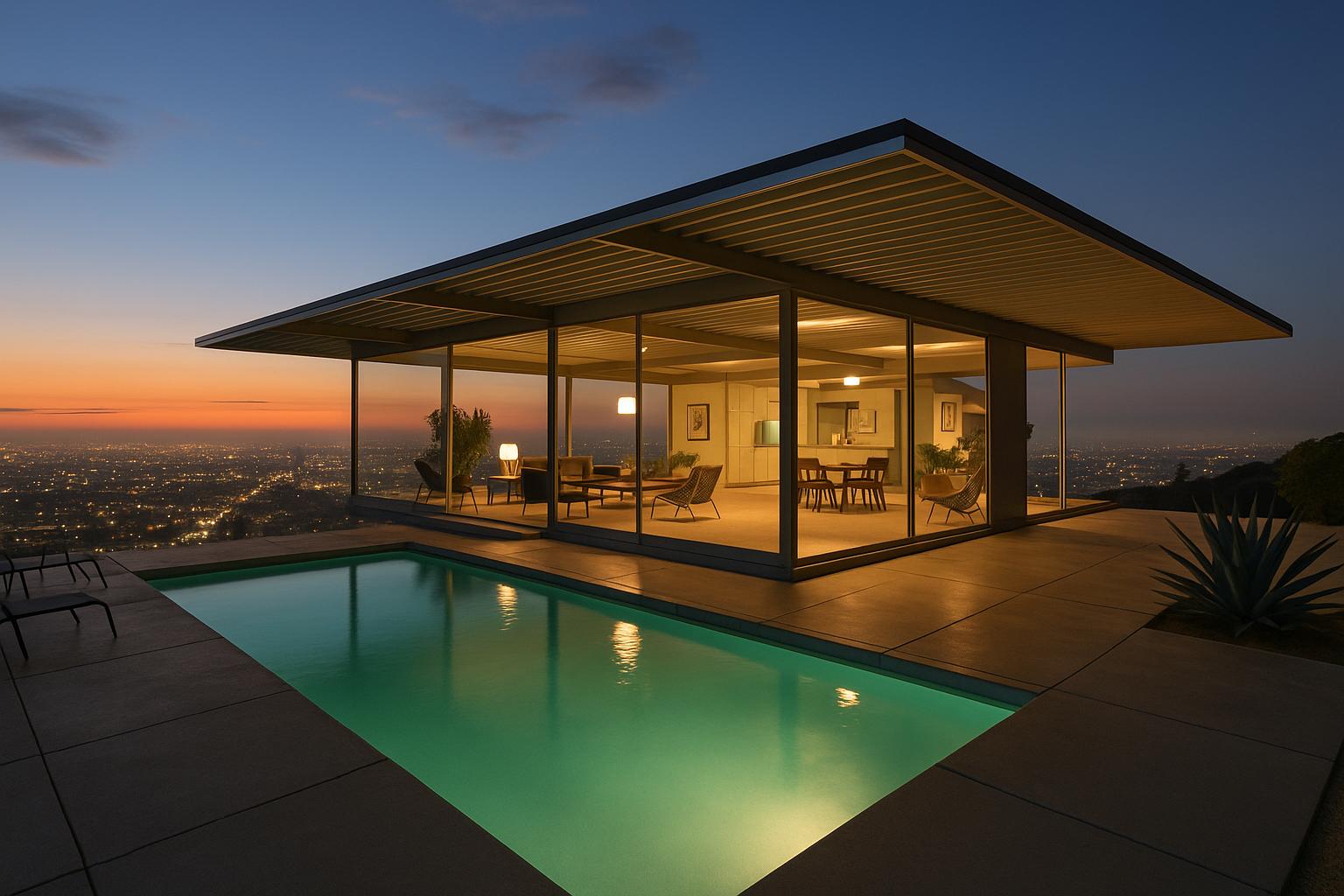
The Architectural Masterpiece
The Stahl House, also known as Case Study House #22, stands as a pioneering piece of modern architecture nestled in the landscape of Los Angeles. Conceived by the visionary architect Pierre Koenig in 1959, the Stahl House has etched itself into the collective memory as an iconic representation of mid-century modern design, capturing the imagination of many and influencing architecture for generations.
Location and Setting
Positioned elegantly in the Hollywood Hills, the Stahl House offers an unobstructed, sweeping vista of Los Angeles. The location is not just a backdrop but an integral element of the design, enhancing the house’s harmonious blend with its surroundings. The strategic placement on a hillside highlights the unique integration of indoor and outdoor spaces, creating a seamless flow that is both inviting and functional. The house’s orientation and structure allow for an abundance of natural light to flood the interiors throughout the day, generating a dynamic ambiance that shifts with the natural light, accentuating the minimalist architecture and its intrinsic beauty.
The setting of the Stahl House emphasizes its connection to the environment. With the natural landscape as its canvas, the design ensures that the surrounding vistas become a living, breathing part of the home itself. The tranquil atmosphere that comes with its elevated position provides a peaceful retreat within the bustling metropolis of Los Angeles.
Design Philosophy
The Stahl House was birthed from the visionary Case Study House Program, an ambitious initiative that sought to redefine residential design in the wake of World War II. Through this program, architects were encouraged to experiment with innovative materials and designs that could redefine the notion of domestic living. Pierre Koenig rose to this challenge by choosing materials commonly associated with industrial construction—steel and glass—to bring his unique vision to life, demonstrating that these materials could be used to create dwellings that are both cost-effective and aesthetically pleasing.
Koenig’s philosophy centered on the idea of an economical yet stylish living space. His design utilized extensive glass walls, which serve a dual purpose: they blur the distinction between the interior and exterior of the house, promoting a sense of openness and freedom, while also anchoring the home in its natural environment. This approach not only fosters a deep connection with the surrounding nature but also maximizes the use of daylight, reducing reliance on artificial lighting during the day.
Structural Innovation
Pierre Koenig’s use of steel in the construction of the Stahl House marked a significant departure from traditional residential architecture practices of the time. The decision to embrace steel was not merely a novelty; it was a calculated choice that provided structural strength without sacrificing the minimalist aesthetics that define the house. The innovative structural layout included cantilevered sections that extend outwards, maintaining balance and support while enhancing the open feeling and providing breathtaking panoramic views of the cityscape below.
Steel, with its inherent strength and flexibility, allowed for thinner structural elements and enabled larger spans, granting an airy, open feeling inside the home. This strategic use of materials helped in crafting a design that is both robust and light, embodying the principles of modern architectural design. The entire structural system supports an idea of fluidity, ensuring that the visual connection to the Los Angeles skyline is uninterrupted and continues to mesmerize visitors.
Legacy and Influence
The Stahl House has gone beyond being a physical dwelling to become a cultural touchstone, prominently featured in countless photographs, films, and advertisements over the decades. As an architectural icon, it has been celebrated for its pioneering use of materials like glass and steel, serving as an inspirational blueprint for architects around the world. Its continued relevance and influence can be seen in numerous contemporary residential designs that focus on sustainability, minimalism, and harmony with the natural environment.
In contemporary architectural discourse, the Stahl House is lauded for its exceptional design originality and its role in challenging the conventional norms of architecture. It stands as a testament to innovative thinking that seamlessly merges functionality with visual allure, offering a model of modern living that many aspire to achieve. Its success lies not only in its structural and aesthetic achievements but also in its embodiment of a lifestyle that celebrates openness, transparency, and a connection with nature.
The architectural brilliance of the Stahl House has had rippling effects across the field of architecture, inspiring a movement towards more considerate and environmentally attuned designs. It has shown that houses do not merely exist as shelters but can serve as harmonious extensions of their surroundings, enhancing the day-to-day experiences of those who inhabit them. Pierre Koenig’s understandings and applications of modernist principles in the design of the Stahl House have contributed significantly to the evolution of residential architecture, establishing the house as an enduring symbol of architectural innovation and a quintessential example of mid-century modern design.